
The best car seat cushion for back pain is the one that matches your body, your car seat shape, and the kind of pain you actually feel, not just whatever is top-rated online.
Back pain in the car tends to show up for a few predictable reasons, your pelvis rolls back, your lumbar curve flattens, your hips get pinched, and vibration plus long static sitting does the rest. A cushion can help, but only if it fixes your specific issue, otherwise it becomes one more awkward layer you fight with every drive.
This guide walks through what usually causes pain while driving, what to look for in cushions that people actually keep using, and how to set everything up so you feel the difference within a week or two, not after buying three more “miracle” products.

Why car seats trigger back pain (and what a cushion can actually fix)
Car seats are designed for safety, packaging, and broad comfort, not your exact anatomy. Many seats encourage a slightly slouched posture, and that can irritate your lower back over time, especially if you sit all day at work.
Here are the patterns that show up most often, and how cushioning changes the mechanics.
- Posterior pelvic tilt (slumping): your hips roll back, your low back rounds, and the paraspinal muscles stay “on” to hold you up. A lumbar support pillow can help more than extra seat padding.
- Hip pressure and sciatic-like symptoms: numbness or burning down the leg often relates to pressure under the thighs or at the glutes. A seat cushion with a coccyx cutout or a pressure-relieving foam base may help.
- Tailbone sensitivity: common after long drives, postpartum, or after a fall. Cutout designs can reduce direct tailbone load, but sometimes they raise you too much, fit matters.
- Vibration fatigue: especially in trucks, older vehicles, or long highway commutes. Denser foam can dampen vibration better than very soft gel toppers.
According to the NIH (National Institutes of Health), low back pain is extremely common, and when symptoms persist or worsen, evaluation can be appropriate. A cushion is a comfort and ergonomics tool, not a diagnosis or a cure.
Quick self-check: which cushion style fits your pain pattern?
Most people buy the wrong style because they shop for “back pain” like it’s one thing. Use this quick check to narrow your options before you compare brands.
- If your pain is centered in the low back and you notice slumping, prioritize lumbar support, and consider only modest seat height changes.
- If your pain is on one side, or you feel hip pinch, look for a cushion that supports the sit bones evenly and doesn’t force your pelvis to twist.
- If you feel numbness/tingling after 20–40 minutes, you likely need pressure distribution under the thighs and glutes, not extra softness.
- If bumps and road vibration bother you, choose firmer, higher-density foam and avoid very bouncy pads.
- If you feel cramped at the steering wheel, be careful with thick cushions, they can raise you and change knee/hip angles.
Key point: if a cushion forces you to reach for the wheel, pushes your head toward the roof, or makes your knees rise above your hips, it may backfire even if it feels plush at first.
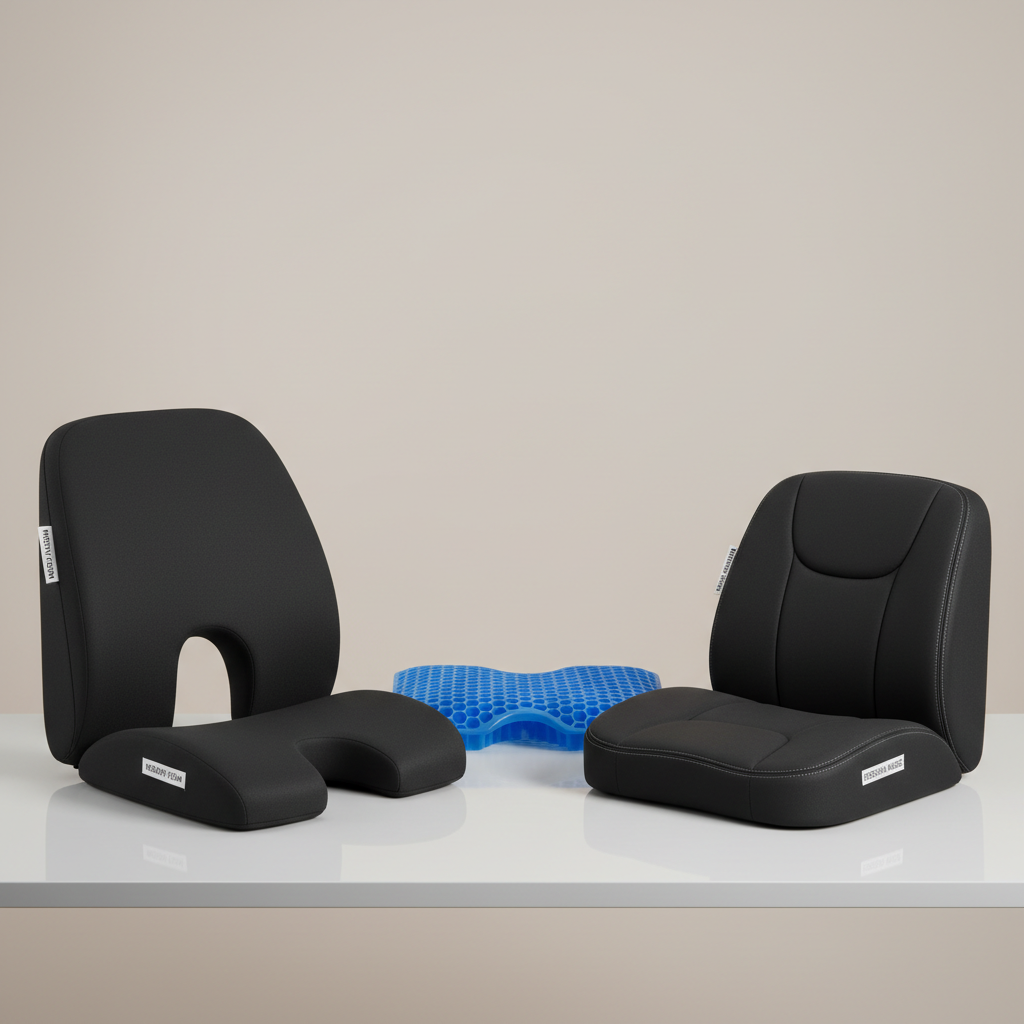
What to look for in the best car seat cushions for back pain
Materials and shapes matter, but so does how the cushion behaves after two weeks of heat, friction, and getting in and out of the car. Here’s what tends to separate “sounds good” from “still using it three months later.”
Material: memory foam vs gel vs hybrid
- High-density memory foam: common for a reason, it spreads pressure and holds shape when quality is decent. If it’s too soft, you sink and slump.
- Gel layers: can feel cool and cushy, but some designs bottom out quickly. Better as a thin top layer than the whole structure.
- Grid/honeycomb elastomer: often breathable and springy, but fit varies a lot by brand and vehicle seat contour.
Shape: flat, contoured, wedge, or cutout
- Contoured “U-shape” with coccyx cutout: good for tailbone pressure, sometimes helpful for sciatica-like discomfort, but only if it doesn’t tip your pelvis back.
- Wedge cushion: raises the hips slightly and can improve hip angle, helpful when slumping is the main issue. In some cars it makes you feel pushed forward, so watch reach distance.
- Mostly flat cushion: underrated for people who simply need a small height boost and pressure relief without changing posture too aggressively.
Practical fit details that people forget
- Thickness: 1.5–3 inches works for many drivers, thicker can mess with headroom and mirror position.
- Non-slip base + straps: if it slides, you tense up constantly, which defeats the point.
- Breathable cover: especially in warm states, sweaty discomfort becomes “back pain” surprisingly fast.
- Easy to clean: if it’s annoying, you stop using it.
Buyer’s cheat sheet: cushion types and who they usually help
Instead of pretending there’s one winner, here’s a practical table you can use to shortlist. Think of it as matching problems to tools.
| Type | Best for | Watch out for | Quick tip |
|---|---|---|---|
| Memory foam contoured + coccyx cutout | Tailbone pressure, general soreness on long drives | Too soft can increase slumping | Pair with mild lumbar support if low back still aches |
| Ergonomic wedge | Slouching, low back fatigue, hips feel “stuck” | Can push you forward, change pedal feel | Start with a low-angle wedge, adjust seat rails after |
| Gel or gel-hybrid | Heat discomfort, short commutes, moderate pressure points | Some designs bottom out, can feel unstable | Choose a firmer base with a thin gel top |
| Grid/honeycomb elastomer | Breathability, pressure distribution, mixed body types | Fit varies a lot by seat contour | Look for a grippy base and medium firmness |
| Lumbar support pillow (add-on) | Low back pain from flattening lumbar curve | Too thick can over-arch, irritate facets | Place at belt-line height, not mid-back |
How to set up your cushion so it actually reduces pain
The setup step looks boring, but it’s where most people lose the benefit. A cushion changes your height, your hip angle, and your distance to controls, and your body notices all of it.
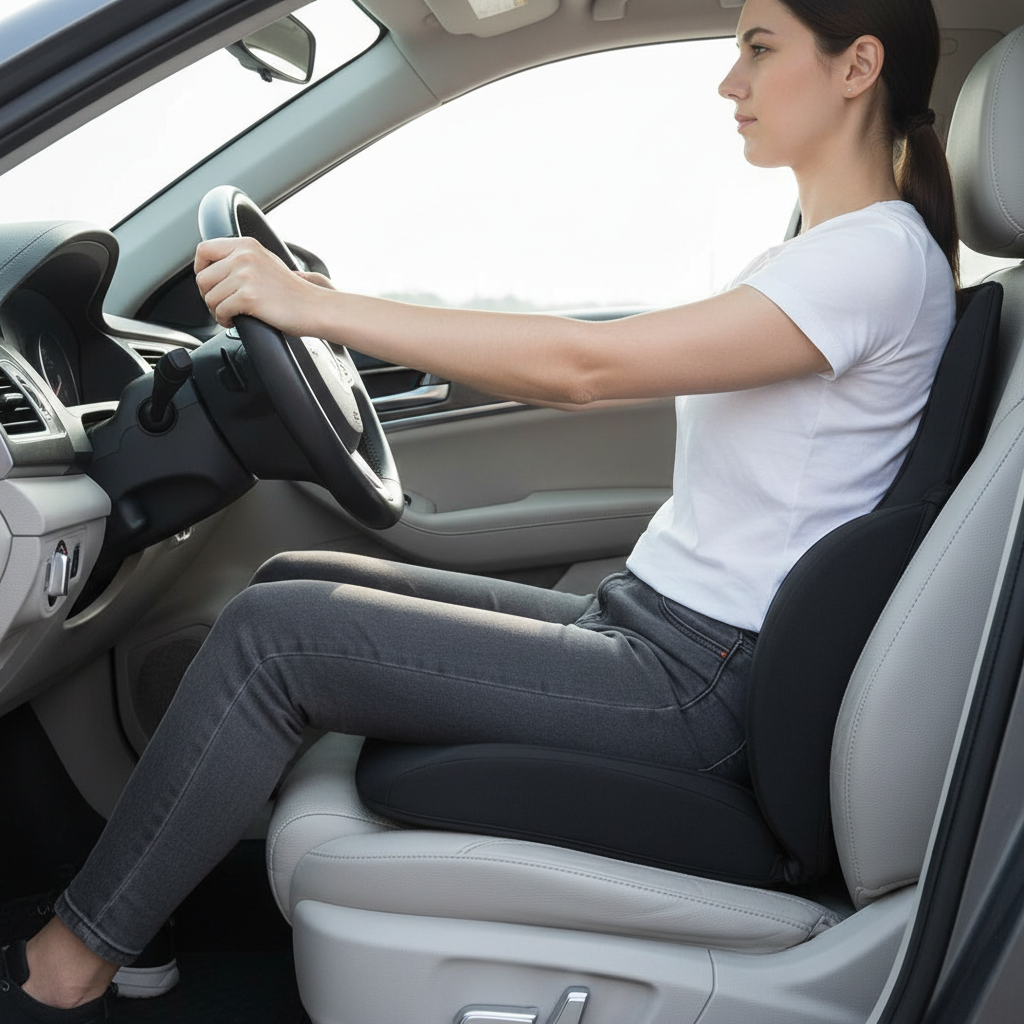
Step-by-step setup (5–10 minutes)
- Start with seat position: slide the seat so your knees stay slightly bent at full pedal press, not locked.
- Add the cushion and re-check mirror height, steering wheel reach, and headrest position.
- Adjust seatback angle: many drivers do better slightly more upright than they think, a small change can reduce low back strain.
- Set lumbar support: if your seat has it, use a moderate level. If you use a lumbar pillow, place it around the natural curve just above the belt line.
- Test-drive for 15 minutes: look for new pressure points at the back of thighs, tailbone, or one-sided hip loading.
Small habit changes that amplify cushion benefits
- Micro-breaks: on long drives, standing for even 60–90 seconds often helps more than another accessory.
- Wallet out of back pocket: it sounds minor, but it can tilt the pelvis and irritate the low back.
- Don’t chase softness: support usually beats plushness for back comfort over time.
Common mistakes that make back pain worse
Even the best-rated products can feel wrong if the fundamentals get ignored. These mistakes are common, and they’re usually easy to fix.
- Buying a cushion that’s too thick, then compensating by reclining more, which increases slumping and neck strain.
- Using a coccyx cutout for “low back pain” when the real issue is lack of lumbar support, the cutout can remove support you actually need.
- Letting the cushion drift, even slight sliding makes you brace with hips and low back.
- Ignoring asymmetry, if you always lean on the center console armrest, you may create one-sided loading that no cushion can fully cancel.
- Expecting instant results, some discomfort patterns calm down after a few consistent drives, but sharp or worsening pain is a different story.
When to get professional help (and safety notes)
If you’re trying to find the best car seat cushion for back pain because driving has become unbearable, it may be time to step back and make sure you’re not masking a problem that needs evaluation.
- Consider medical guidance if pain persists for weeks, wakes you at night, or steadily worsens, a clinician or physical therapist can help sort out causes.
- Get urgent care for red flags like severe weakness, new numbness in the groin/saddle area, loss of bowel or bladder control, or pain after major trauma.
- Driving safety matters: if a cushion changes pedal feel or seating position in a way that reduces control, stop using it and re-fit your setup.
According to the CDC, safe driving includes maintaining full control of the vehicle, so any comfort accessory should support, not compromise, your ability to operate pedals and steering reliably.
Key takeaways and a practical conclusion
The “best” option usually comes down to match and setup, a cushion that stabilizes your pelvis and reduces pressure points often beats a thicker, softer pad that feels great in the driveway and lousy on the highway.
- If slumping drives your pain, start by adding modest lumbar support and consider a gentle wedge.
- If pressure and numbness show up first, prioritize pressure distribution and a stable, non-slip base.
- If tailbone pain is the headline, try a coccyx cutout, but keep thickness reasonable so posture stays neutral.
If you want one next step, pick one cushion style based on your pain pattern, set it up carefully, then give it a week of consistent use before you judge it.
FAQ
What is the best car seat cushion for back pain for long drives?
For long drives, most people do well with a medium-firm memory foam cushion that distributes pressure without letting you sink. If your low back aches from slouching, adding lumbar support can matter as much as the seat pad itself.
Do coccyx cutout cushions help sciatica while driving?
They can help when symptoms relate to pressure at the glutes or tailbone area, but “sciatica” has multiple causes. If numbness or tingling worsens, or you notice weakness, it’s worth checking with a professional rather than only swapping cushions.
Is memory foam or gel better for back pain in a car?
Memory foam tends to provide steadier support across longer commutes, while gel often feels cooler but can bottom out depending on design. A hybrid, firm foam base with a thin gel top, often balances both.
How thick should a car seat cushion be for back pain?
Many drivers find 1.5–3 inches workable, thicker cushions can raise you too much and force posture changes. The “right” thickness depends on headroom, steering wheel reach, and whether your knees stay below hip level.
Can a seat cushion make back pain worse?
Yes, if it increases slumping, shifts you too close to the pedals, or creates new pressure behind the thighs. Sliding cushions are another big one, you end up bracing unconsciously.
Should I use a seat cushion and a lumbar pillow together?
Often, yes, but keep both moderate. A cushion can reduce pressure and improve hip angle, while lumbar support maintains the natural curve. Too much of either can feel like you’re being pushed out of the seat.
How do I stop a car seat cushion from sliding?
Look for a non-slip base and adjustable straps, and make sure the cushion size matches the seat pan. If your seat surface is very smooth, a thin grippy mat underneath can help, as long as it doesn’t interfere with controls.
If you’re trying to narrow down options and would rather not gamble on trial-and-error, choose a cushion style based on your pain pattern, then prioritize stable fit and moderate firmness, it’s usually the most “boring” picks that end up being the most usable.