
how to fix car door lock cylinder replacement usually comes down to one thing, you replaced the cylinder, but the linkage, clip, or key coding didn’t end up matching what the door actually needs, so the lock either won’t turn, won’t actuate the latch, or feels sloppy.
If you’re stuck outside your own car, or you can lock and unlock from inside but the key does nothing, it’s more than an annoyance, it’s a security and “what if the battery dies” problem. The good news is most post-replacement issues are mechanical and visible once the door panel is off.
This guide focuses on realistic DIY checks, what tends to go wrong on common US vehicles, and when it makes more sense to call a locksmith or a shop instead of forcing parts and breaking clips.
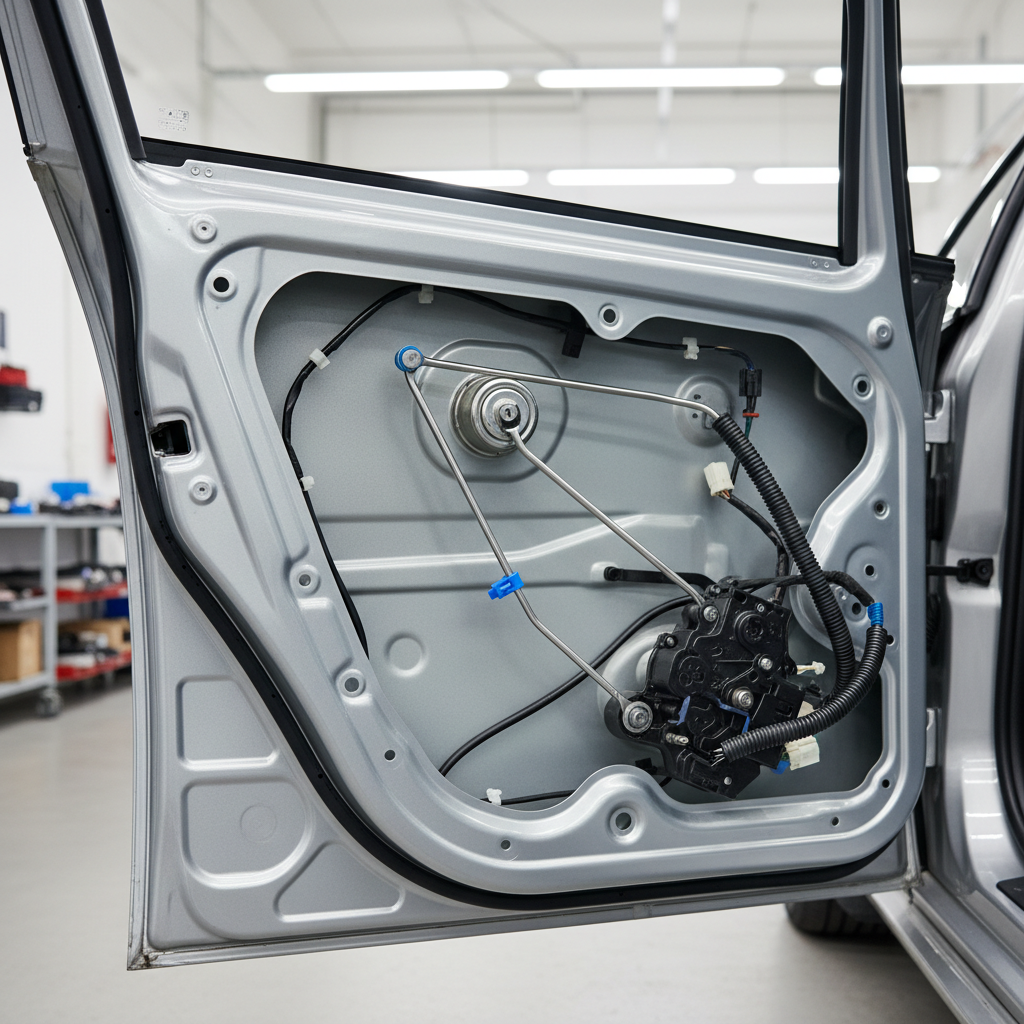
What “failed” after a lock cylinder replacement (the real symptoms)
People say the replacement “doesn’t work,” but the symptom matters because each one points to a different mistake or missing step.
- Key won’t insert fully, or binds halfway, often wrong cylinder, wrong wafers, or debris in the keyway
- Key turns but nothing happens, linkage rod not seated, plastic clip flipped open, or cam orientation wrong
- Key won’t turn even with the right key, cylinder not seated, tailpiece jammed, or door handle pressure misaligning parts
- Lock works one direction only, cam or rod travel limited, or the latch is sticky and needs service
- Lock feels loose or pulls outward, retaining clip not fully engaged, gasket missing, or incorrect housing depth
Before you tear back in, confirm what “good” looks like: on most cars, the key cylinder rotates a cam or tailpiece, that movement pulls a rod or cable, and the latch changes state. If the cylinder rotates but the latch doesn’t, the issue is usually not “inside” the cylinder.
Why lock cylinder replacements go sideways (common causes)
Most problems come from small misalignments you can’t see until the trim panel is off. A few patterns show up again and again.
Wrong part, or “close enough” aftermarket fit
Many cylinders look identical in listings but differ in tailpiece length, cam shape, or how the retaining clip locks. If your new cylinder seats but the key travel feels different, suspect a fit mismatch.
Retaining clip not locked all the way
The clip can feel “in,” but not actually capture the cylinder groove. Then the cylinder shifts under load, the key binds, and you get that loose, crunchy turn.
Linkage rod not clipped, or clipped to the wrong hole
Some handles and latch assemblies have multiple rod holes, especially when the same door shell supports different trims. A rod in the wrong spot changes leverage and travel, so it unlocks but won’t lock, or vice versa.
Cam orientation off by 180 degrees
On many setups, the tailpiece/cam can install in two orientations. One “works” but pushes instead of pulls, or hits a stop early.
Key coding or wafer setup mismatch
If you bought an uncoded cylinder or rekey kit, a tiny wafer height error can make the plug bind. That shows up as the key not inserting smoothly, or turning only when you wiggle hard.
According to NHTSA, safe driving includes maintaining vehicle equipment in proper working order, and door latches/locks are part of occupant protection in a crash, so it’s worth treating a lock issue as more than cosmetic.
Quick self-check: which situation are you in?
Use this as a fast sorting step before you start forcing anything. If you can answer these, you’ll usually know where to focus.
- Does the key insert smoothly with the door open and closed?
- With the door panel off, can you see the cam move when you turn the key?
- When the key turns, does the rod/cable move at the same time?
- Does the latch lock/unlock by the inside switch reliably?
- Does pulling the exterior handle while turning the key change anything? If yes, you may have handle pressure misalignment.
Troubleshooting table: symptom → likely cause → fix
This is the part most DIY guides skip, but it’s the fastest way to avoid random trial-and-error.
| Symptom | Most likely cause | What to do |
|---|---|---|
| Key won’t insert fully | Wrong cylinder or wafer issue | Compare old/new keyway, clean key, verify coding, consider locksmith rekey |
| Key won’t turn | Cylinder not seated, tailpiece jam, clip half-set | Re-seat cylinder, confirm clip fully engaged, inspect for interference |
| Key turns freely, nothing happens | Rod not connected or clip open | Reconnect linkage, lock plastic retainer, verify correct rod hole |
| Works with door panel off, fails when assembled | Rod rubbing panel, vapor barrier snag, handle bracket shifting | Route rods correctly, tape barrier edges, confirm bracket screws tight |
| Lock works one direction only | Cam orientation wrong or travel limited | Flip cam/tailpiece orientation, check latch for binding, lubricate latch |
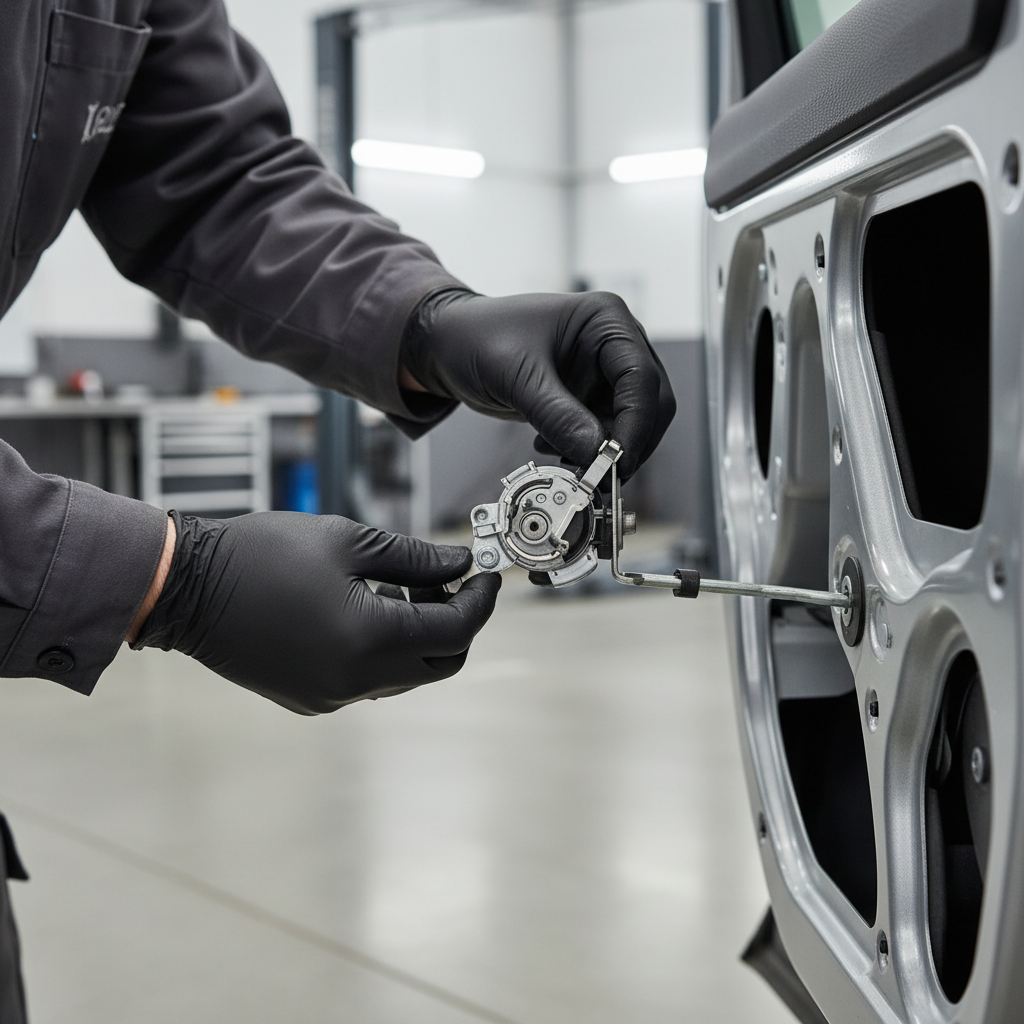
Step-by-step: how to fix issues after car door lock cylinder replacement
If you already replaced the cylinder and it’s not right, you’re typically redoing a few steps carefully, not starting over from scratch. Work with the window up, ignition off, keys out, and keep track of clips because replacements are not always stocked locally.
1) Reconfirm cylinder seating and retaining clip engagement
- Remove the interior trim panel enough to access the cylinder area, then visually confirm the cylinder flange sits flush.
- Push the cylinder inward from outside while you slide the retaining clip into its groove from inside.
- If the clip “bottoms out” early, don’t force, pull it back out and check whether a gasket, shield, or bracket is mispositioned.
Small tip: a cylinder that sits 1–2 mm proud can still accept the key, but it often binds under turning force. Flush matters.
2) Verify cam/tailpiece orientation and travel
- Turn the key slowly while watching the cam, it should move smoothly to its stops without hitting metal or plastic.
- If travel looks short or the cam hits a bracket, remove the cylinder and rotate the tailpiece/cam (if your design allows), then retest.
- Compare to your old cylinder’s cam orientation if you still have it, this saves time.
3) Fix linkage rod connection (the most common miss)
- Confirm the rod is inserted fully into the plastic retainer, then rotate the retainer until it locks, many failures are simply an “open” retainer.
- If there are multiple holes, use the same location as the factory setup, wrong leverage changes lock behavior.
- Cycle the lock 10–15 times with the panel still off, watching for slip or pop-out.
4) Address latch binding and dry mechanisms
Sometimes the cylinder is fine, but the latch is sticky, so the key feels like it “does nothing.” That often shows up in older vehicles or doors that took a hit.
- Test the latch with the interior lock knob and the power lock switch, if it struggles there too, service the latch.
- Use a suitable lubricant for door latches, apply lightly to moving latch parts, avoid soaking electrical actuators.
- Check for bent rods, a slight bend can make it work when warm and fail when cold.
According to AAA, keeping locks and latches maintained can reduce inconvenient lockouts, which is a practical way to lower the odds you end up stranded.
5) If the key coding seems wrong, stop forcing it
If the key doesn’t insert cleanly, or turning requires heavy torque, forcing can snap the key or damage wafers. In many cases, that becomes a locksmith job anyway, just with more broken parts.
- Try your spare key, worn keys can mimic a bad cylinder.
- Inspect the keyway for debris or a wafer sticking out of the plug.
- If it’s a rekeyed cylinder, consider having a locksmith verify wafer stacks and springs.
Practical tools and prep that actually help
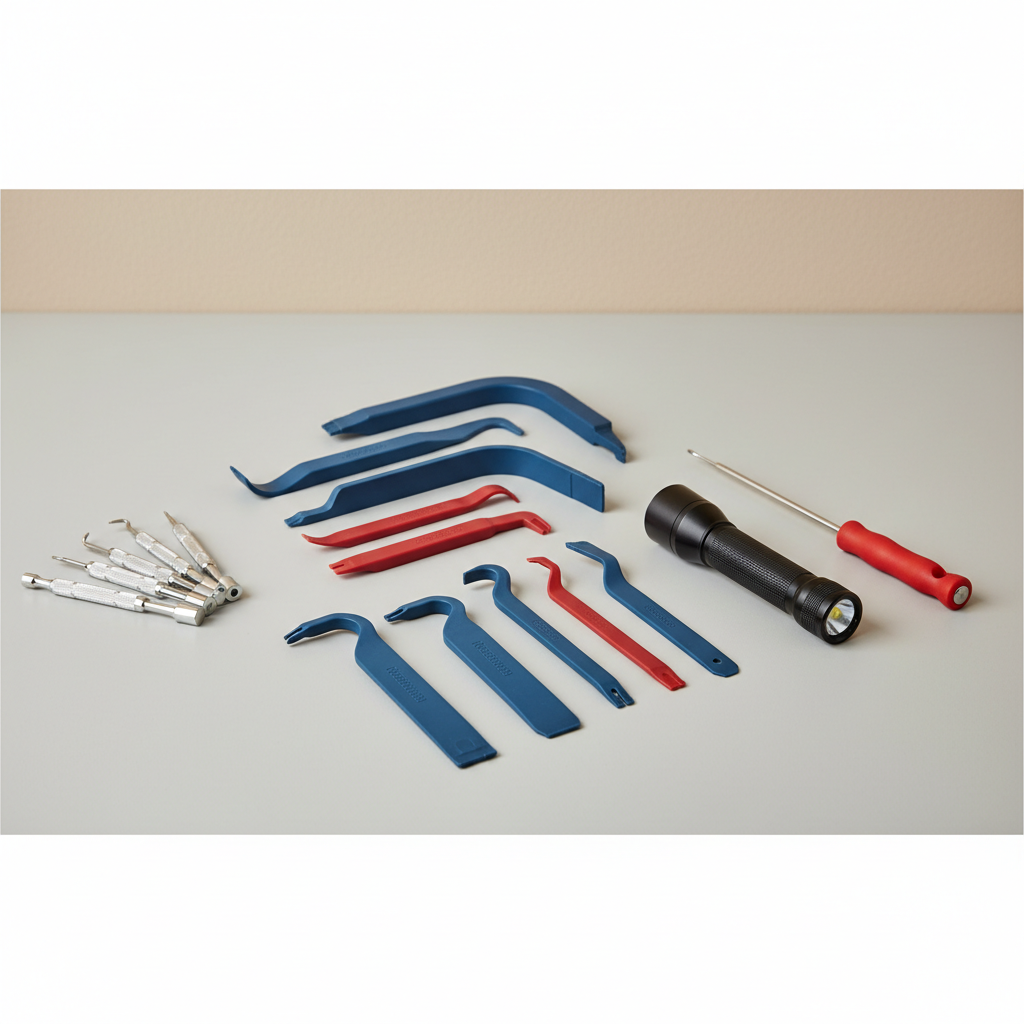
You don’t need a full shop, but you do need to avoid improvising with the wrong tools, that’s how clips fly into the door and disappear.
- Trim removal tools to protect panels and reduce broken clips
- Pick set or small hook tool for retainers and rod clips
- Magnetic pickup tool for dropped clips/screws inside the door shell
- Flashlight or headlamp because you’re working in a dark cavity
- Painters tape to hold the vapor barrier edge out of the way temporarily
If your vehicle has side airbags in the door, be cautious with connectors and wiring, and if you’re unsure, it’s smart to consult a repair manual or a qualified technician for your specific model.
Common mistakes that waste time (and how to avoid them)
A lot of “replacement went wrong” stories come from a few avoidable habits.
- Testing only with the door closed, always test lock function with the door open first to avoid getting locked out mid-job.
- Over-tightening handle/cylinder area screws, this can distort brackets and change alignment.
- Ignoring the vapor barrier, if it bunches up it can push on rods and cause intermittent issues after reassembly.
- Skipping comparison to the old part, a 30-second cam and length check can prevent hours of guessing.
- Using the wrong lubricant, heavy grease in the cylinder keyway can trap grit, if lubrication is needed, use products intended for locks.
When you should consider a locksmith or a shop
DIY makes sense for a straightforward mechanical cylinder swap, but some situations are where you save money by stopping early.
- Your key won’t insert or turn even with a known-good spare key, which suggests coding or internal cylinder issues.
- The vehicle uses an integrated handle/cylinder module that’s easy to break and expensive to replace.
- You see damaged linkage mounts, cracked plastic retainers, or a bent latch bracket, parts may need replacement, not adjustment.
- The car has advanced anti-theft integration tied to keys or door modules, which can vary by make and model.
According to the National Automotive Service Task Force (NASTF), using correct repair information matters for safe, accurate service, so if you can’t confirm the exact procedure for your vehicle, a professional with the right documentation can be a safer route.
Key takeaways before you button the door back up
- Seat and clip first, a half-locked retaining clip can mimic multiple other failures.
- Watch the motion chain, cylinder turn → cam movement → rod/cable movement → latch state.
- Don’t force the key, if coding is wrong, muscle won’t fix it.
- Test before reassembly, cycle lock/unlock repeatedly with the panel off, then again after the panel is on.
Conclusion
If you’re figuring out how to fix car door lock cylinder replacement problems, focus less on the cylinder itself and more on how it’s seated, clipped, and connected, that’s where most real-world failures live. Get the cylinder flush, confirm cam orientation, lock the linkage retainers, and test the full motion chain before you reinstall trim.
If the key action still feels wrong after those checks, especially if insertion or turning binds, it’s usually smarter to pause and bring in a locksmith or technician rather than risk a broken key or damaged latch.
FAQ
Why does my key turn after replacement but the door won’t unlock?
Usually the cam is turning but the linkage rod isn’t connected, or the plastic retainer clip never fully locked. With the panel off, you should see the rod move when you turn the key.
How do I know if I installed the lock cylinder retaining clip correctly?
A correct clip sits fully in its groove and the cylinder won’t pull outward when you tug gently from the outside. If the cylinder shifts even slightly, remove and reseat it rather than trying to “tighten” something else.
Can a wrong lock cylinder still fit in the door?
Yes, many cylinders share similar housings, but tailpiece length or cam shape can differ enough to break function. Comparing the old and new parts side by side often reveals the mismatch fast.
Do I need to lubricate a new door lock cylinder?
Often you don’t. If the keyway feels dry or gritty, use a lock-appropriate lubricant sparingly, and avoid heavy grease that can collect dust, especially in daily-driven vehicles.
Why does the lock work with the door panel off but not after I reassemble it?
This points to interference, a rod rubbing the panel, a vapor barrier folded into the linkage path, or a bracket shifting when screws tighten. Reopen and look for contact marks or pinched parts.
Is it normal for the key to be harder to turn when the door is closed?
A small difference can happen, but heavy resistance suggests misalignment between the handle area and latch linkage, or a latch that needs service. If you have to force it, something is off.
When should I stop DIY and call a locksmith?
If the key won’t insert smoothly, won’t turn with a spare key, or you suspect a rekey wafer issue, a locksmith can usually diagnose and rekey without you damaging the new cylinder.
If you’re trying to fix a car door lock cylinder replacement quickly and you’re stuck on whether the issue is part fit, linkage routing, or key coding, it can help to document the symptom and the cam/rod movement with a short video before you buy more parts, that makes getting the right next step much less guessy.