
How to Check Car Battery Health and Life Span
how to check car battery health life usually comes down to two things: a quick reality check on day-to-day symptoms, then a couple of simple tests that tell you whether the battery still holds and delivers power.
If you only wait for a “click, click” no-start morning, you miss the window when a battery is weak but still predictable. Battery failures often show up as small annoyances first, then one cold night tips it over.
This guide walks through what battery health really means, how to test it at home, when a free parts-store test is enough, and when it’s smarter to stop troubleshooting and replace the battery before it strands you.

What “battery health” means (and why it’s not just voltage)
A healthy 12V car battery does two jobs: it stores energy and it can deliver high current for starting. Voltage mostly reflects stored charge, while cranking ability depends on internal condition, plate wear, and resistance.
That’s why a battery can show “12.6V” and still struggle to crank, especially in cold weather. The more useful picture comes from combining a few checks: resting voltage, voltage drop during start, and (ideally) a proper load or conductance test.
According to Battery Council International..., battery maintenance and correct testing methods matter because modern vehicles draw power even when parked, and weak batteries can create confusing electrical symptoms.
Common signs your battery is weakening (real-world clues)
Before you touch a tool, pay attention to patterns. Many people chase alternator problems when the battery simply can’t hold up under load.
- Slow crank or a longer-than-usual start, especially in the morning
- Random electrical glitches: flickering interior lights, infotainment reboots, odd warning lights
- Frequent jump starts or needing a charger more often
- Corrosion on terminals, loose clamps, or a swollen battery case
- Age: many batteries become less predictable after a few years, depending on climate and driving habits
One caveat: short trips (especially with lots of accessories on) can mimic battery aging because the battery never gets fully recharged. That’s why testing matters.
Quick self-check: which situation are you in?
If you’re trying to decide what to do today, this checklist helps you sort “needs a simple fix” from “likely replacement soon.”
- Likely OK: starts strong, no electrical weirdness, battery under ~3 years, terminals clean
- Needs attention: starts a bit slower, visible corrosion, lots of short trips, long periods parked
- High risk: multiple no-starts, jump-start dependency, swollen case, battery older and winter is coming
If you fall into “needs attention,” start with cleaning and testing. If you’re in “high risk,” testing is still useful, but you may want to plan replacement rather than gambling on one more season.

How to test at home with a multimeter (step-by-step)
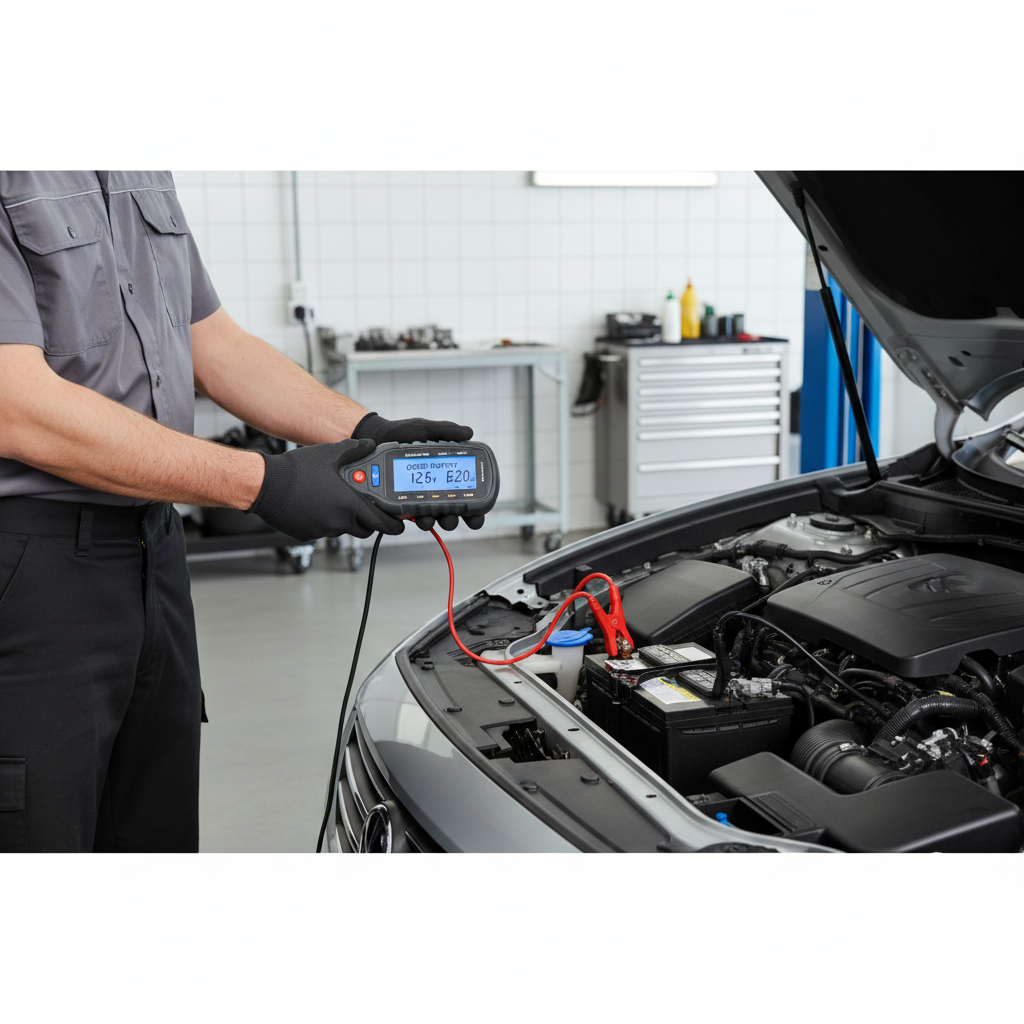
For how to check car battery health life at home, a basic digital multimeter is a good start. It won’t replace a real load test, but it catches a lot of issues quickly.
1) Check resting voltage (state of charge)
Let the car sit off for a few hours (overnight is better). Set the meter to DC volts, touch red to positive and black to negative.
- ~12.6V to 12.8V: typically fully charged
- ~12.4V: partially charged, not necessarily “bad”
- ~12.2V or lower: low charge, could be drain, short-trip pattern, or battery wear
Voltage alone can’t prove health, but it tells you if you’re testing a battery that’s simply undercharged.
2) Watch voltage during cranking (quick stress check)
Keep the meter connected and have someone start the engine while you watch the lowest reading. Many healthy systems stay around 9.6V or higher during cranking, but exact numbers vary by temperature and vehicle.
- If it drops very low and the car cranks slowly, the battery may be weak or there may be cable/connection resistance.
- If voltage barely drops but the starter struggles, suspect connections, ground, or starter issues.
3) Check charging voltage (rules out some alternator problems)
With the engine idling, you’ll often see roughly 13.7V to 14.7V. If it’s consistently much lower (or oddly high), the charging system may need diagnosis. According to AAA..., starting/charging systems are a common breakdown category, and proper testing helps avoid replacing the wrong part.
Tip that saves time: turn on headlights and rear defroster, then re-check charging voltage. A healthy system usually stays in a reasonable range, but don’t over-interpret one reading if your vehicle uses smart charging strategies.
Parts-store tests: load test vs. conductance test (what to ask for)
Many auto parts stores test batteries for free. For how to check car battery health life, the key is knowing what test they run and what the result actually means.
- Conductance test: quick, common, estimates battery condition electronically, good screening tool
- Load test: applies a real load, better at exposing weak batteries that “look fine” at rest
If the result says “recharge and retest,” take that seriously. A low state of charge can make a decent battery look bad, and it can also hide parasitic drain issues.
Estimating battery lifespan: what shortens it, what extends it
Battery life span varies a lot in the U.S. because climate and driving patterns vary. Heat tends to age batteries faster, while cold tends to reveal weakness. The “right” replacement timing is often about risk tolerance, not just a date on a sticker.
| Factor | What it does | What you can do |
|---|---|---|
| Short trips | Battery never fully recharges | Drive longer occasionally or use a maintainer |
| Hot climate | Speeds internal chemical aging | Check more often, replace earlier if tests trend down |
| Cold winters | Higher starting demand exposes weakness | Test before winter, clean terminals |
| Parasitic drain | Battery discharges while parked | Measure draw, fix the source, consider maintainer |
| Corrosion/loose cables | Adds resistance, mimics weak battery | Clean and tighten connections |
If you track anything, track trends: repeated low resting voltage, worse cranking drop, or “recharge and retest” outcomes that keep coming back.
Practical fixes before you replace anything
If tests look borderline, don’t jump straight to a new battery until you handle the simple stuff. These steps are boring, but they solve a surprising number of “battery problems.”
- Clean terminals: remove corrosion, then ensure clamps sit tight
- Check grounds: a bad ground can cause slow crank and weird electronics
- Recharge properly: use a smart charger and let it finish the cycle
- Reduce drain: unplug accessories, check interior lights, review aftermarket installs
If you recharge fully and resting voltage quickly falls again, that points to either battery wear or a drain while parked, sometimes both.
Common mistakes that waste time (or create new problems)
A lot of frustration comes from testing in the wrong order, or treating one number as a verdict.
- Testing right after driving: surface charge can make voltage look healthier than it is
- Ignoring cable condition: resistance from corrosion or damaged cables mimics a weak unit
- Assuming alternator failure because the battery died once, many times it’s just age plus short trips
- Buying by “fits” only: pay attention to CCA rating, group size, and terminal layout
- Skipping safety basics: batteries can vent gas and acid, eye protection and gloves are smart
If you’re unsure about safe handling or you see a swollen case, step back and have a shop inspect it. That’s not being cautious, that’s avoiding a mess.
When to get professional help (and what to ask them to check)
If you keep chasing the issue or the car behaves inconsistently, a professional diagnostic can save money. It’s especially worth it when you suspect a parasitic draw (unexpected electrical load while parked) or when a modern vehicle’s charging strategy complicates quick checks.
- Ask for a battery load test result and the measured CCA performance
- Ask for a charging system test under load
- If the battery drains while parked, request a parasitic draw test and circuit isolation
And if you have repeated no-starts in traffic-heavy or safety-sensitive situations, it’s reasonable to replace earlier rather than trying to “nurse” a battery through one more month.
Key takeaways you can use today
- Voltage is not the whole story, combine resting voltage with a crank drop check.
- Clean, tight connections matter as much as battery age.
- For how to check car battery health life accurately, a parts-store load or conductance test adds confidence.
- If the battery won’t hold charge after a full recharge, plan for replacement or diagnose drain.
Conclusion: a simple routine beats surprise failures
Most battery headaches come from waiting too long or guessing based on one symptom. Check resting voltage after the car sits, watch cranking drop, then confirm with a proper store test if results look borderline.
If you want one action that pays off fast, clean and tighten terminals, then retest a day later. If the numbers keep sliding or the car still cranks lazy, treat it as a reliability issue and schedule a replacement or a diagnostic before it chooses the timing for you.
FAQ
How often should I test my car battery health?
If the battery is newer and the car starts normally, a seasonal check is usually enough. If the battery is older, you park for long periods, or you live where winters hit hard, testing more often can help you avoid a no-start.
What voltage means my battery is bad?
A low resting voltage suggests low charge, not automatically a bad battery. A better clue is how quickly voltage drops again after a full recharge, and whether voltage collapses during cranking.
Can an alternator test good but still have battery problems?
Yes. A charging system can be fine, while the battery can’t store energy anymore. That’s why combining a charging voltage check with a load or conductance test is useful.
Does jump-starting damage the battery?
Occasional jump-starting typically does not “ruin” a healthy battery, but frequent jump-starts often mean the battery is already weak or you have a drain issue. Repeated deep discharges can shorten life span.
How do I know if corrosion is the real problem?
If you see crusty buildup on terminals or the clamps move by hand, fix that first. Many times, cleaning and tightening improves starting immediately, and your test readings become more consistent.
What’s the difference between CCA and battery capacity?
CCA relates to starting power in cold conditions, while capacity relates more to how long it can run accessories. A battery can have acceptable voltage yet fail a CCA-related load test when it’s aged.
Is it worth using a battery maintainer?
If you don’t drive often, take many short trips, or store a vehicle, a smart maintainer can reduce chronic undercharging. It won’t fix a worn-out battery, but it can slow the decline in many situations.
If you’re trying to keep this simple, pick one method and be consistent: either do the multimeter checks at home every few months or get a store test before extreme weather. That small habit is usually cheaper than towing, missed work, and a rushed battery purchase.