
Best car phone mounts for air vent come down to one thing: whether your vent and your phone can stay stable together on real roads, not just in a product photo.
If your current mount sags after a few turns, blocks airflow, or slowly “walks” off the slat, you’re not alone. Air vents vary a lot by vehicle, and many mounts are designed for a generic vent that doesn’t really exist in modern dashboards.
This guide focuses on what keeps an air-vent mount steady in 2026: the clamp style, how it grips the vent, how it handles phone weight, and whether it plays nicely with MagSafe, thick cases, and bigger screens. You’ll also get a quick checklist to match mount type to your car and a few setup tricks that prevent the common failures.
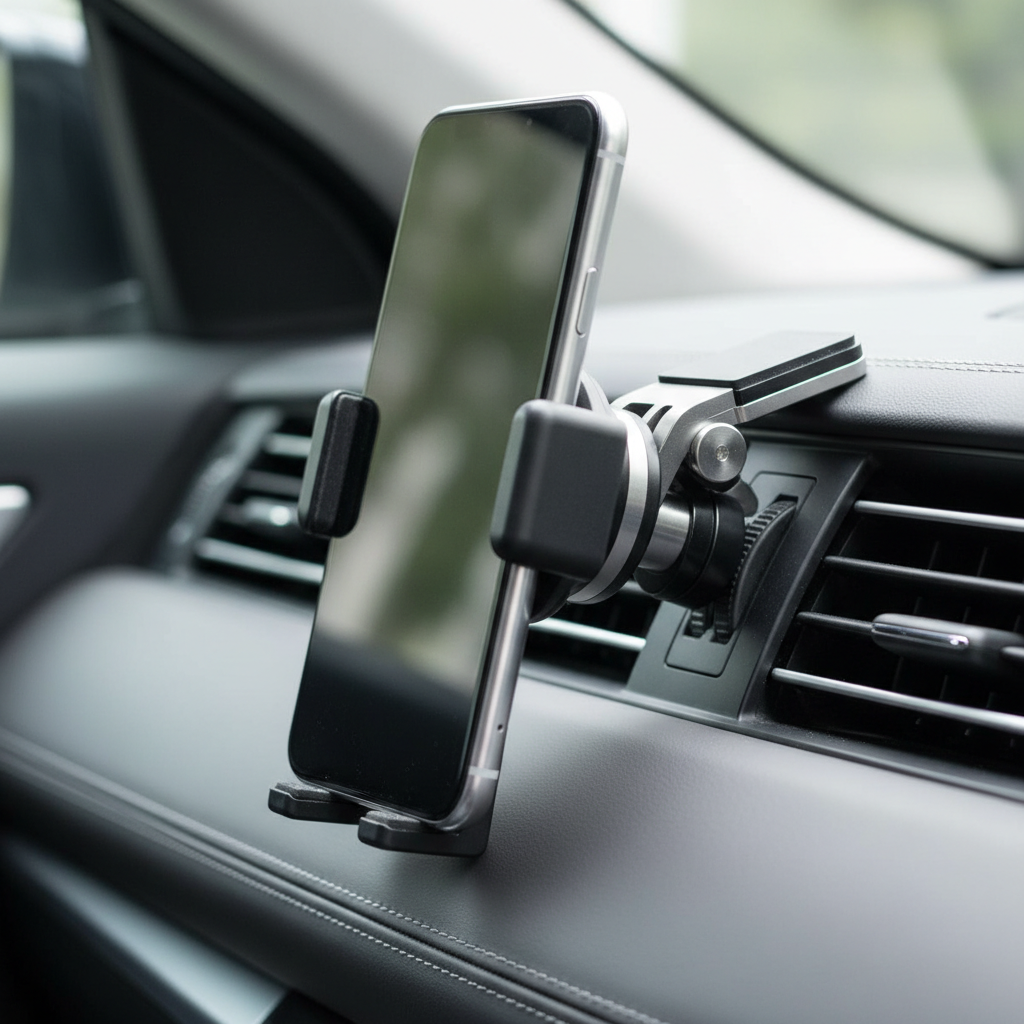
What “stable” really means for an air-vent mount
Stability isn’t just “it doesn’t fall off.” In daily driving, a vent mount fails in softer ways: the phone slowly tilts down, the ball joint loosens, or the grip shifts when you hit uneven pavement.
- No droop: the phone stays at your set angle after bumps and turns.
- No twist: the mount doesn’t rotate around the vent slat under phone weight.
- No creep: the clamp doesn’t inch outward over time, especially on thin slats.
- One-hand usability: you can attach and remove the phone without yanking the vent.
According to NHTSA, driver distraction is a major safety issue, and hands-free use helps reduce risky behavior. That doesn’t mean any mount is “safe,” but a stable setup makes it easier to keep your eyes up and your hands on the wheel.
Why vent mounts wobble (and why yours might keep failing)
Most “bad mount” complaints are actually a mismatch between mount design and vent design, plus phone weight. Here are the usual culprits.
Vent slat shape and strength
Some vents are thick and sturdy, others are thin, curved, or textured. A clamp that works on a chunky horizontal slat can slide on a slim or angled slat, and a hook-style mount can stress fragile slats if overtightened.
Phone weight and leverage
Big phones, rugged cases, and camera bumps increase leverage. If the mount’s ball joint or hinge is mediocre, it “holds” in the driveway and droops on the highway.
Heat, airflow, and material fatigue
Constant hot air can soften cheaper plastics and some adhesives, and it can also make your phone run warmer during charging. Many drivers notice mounts loosening after a hot summer week, then blame the vent, but it’s often the joint material.
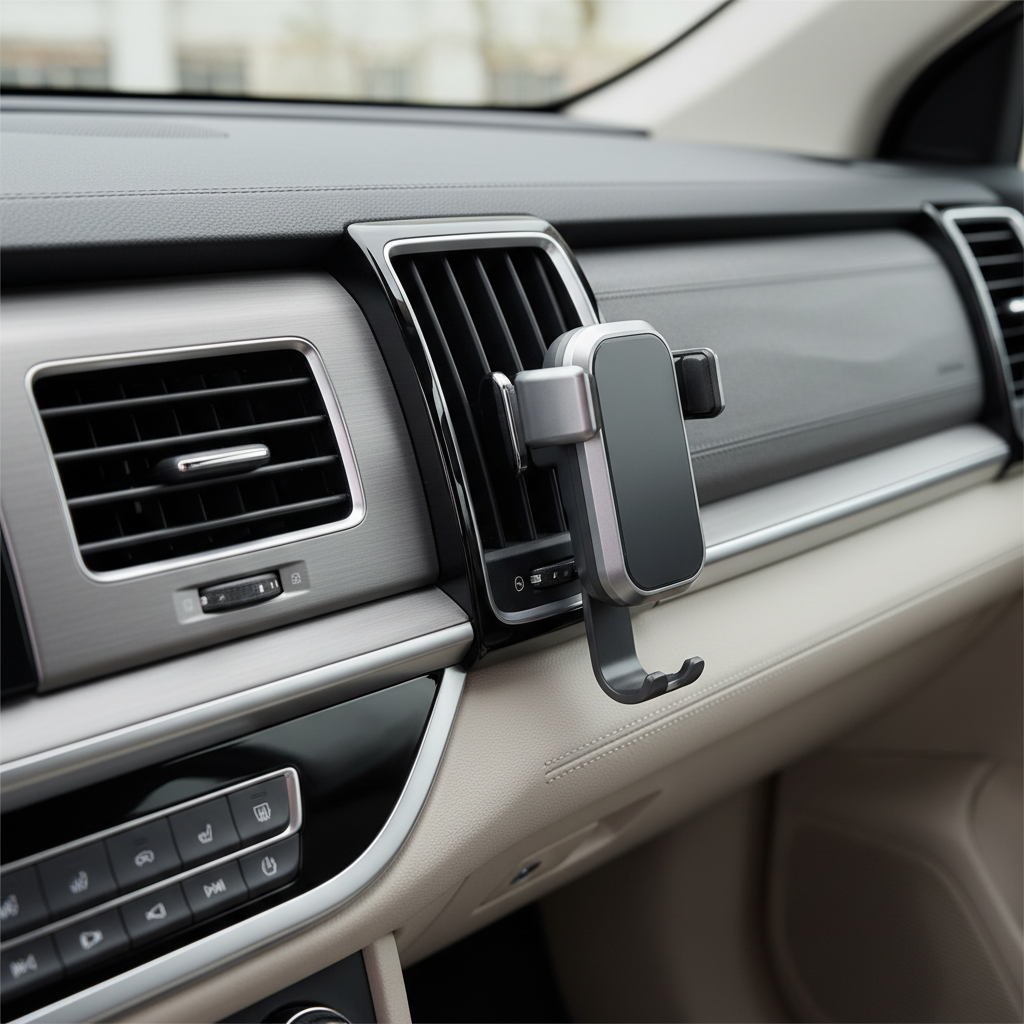
Quick fit checklist: pick the right vent-mount style for your car
Before buying, do this 60-second check. It saves the most money and frustration.
- Vent direction: mostly horizontal slats, mostly vertical slats, or a mix?
- Slat thickness: does the slat feel sturdy when you gently push it, or does it flex?
- Depth behind slat: is there space for a hook to grab behind, or is it blocked?
- Location: is the vent close to the steering wheel (potential clearance issue) or centered?
- Phone setup: MagSafe case, thick rugged case, pop socket, or bare phone?
If your vent slats feel flimsy, or you can’t access behind the slat, a dashboard or windshield mount may be a better call even if you prefer the “clean” vent look.
Comparison table: common air-vent mount types (what they’re good at)
This isn’t a brand ranking. It’s a practical breakdown of the mount styles you’ll see when shopping for the best car phone mounts for air vent stability.
| Mount type | How it grips | Stability upside | Typical downside | Best for |
|---|---|---|---|---|
| Spring clip | Pinches slat with a clip | Fast install, low cost | More wobble, can creep on thin slats | Light phones, sturdy vents |
| Hook-and-tighten clamp | Hook grabs behind slat, knob tightens | Usually the most stable on compatible vents | Needs clearance behind slat, can overtighten | Bigger phones, rough roads |
| Magnetic vent mount (non-MagSafe) | Magnet + metal plate | Quick on/off | Plate placement hassles, weaker with thick cases | Drivers who mount frequently |
| MagSafe vent mount | MagSafe ring alignment + vent clamp | Great alignment, easy one-hand use | Needs MagSafe phone/case, some slip with heavy phones | iPhone users, minimalist setup |
| Cradle + vent clamp | Side arms hold phone + clamp holds vent | More secure hold for non-magnetic phones | Bulkier, arm mechanisms can wear | Android, thick cases, varied phones |
How to choose the best option for your driving (not just your phone)
When people search for the best car phone mounts for air vent use, they often over-focus on “will it fit my phone.” Fit matters, but driving context matters more.
If you drive on bumpy roads or commute long distances
Favor a hook-and-tighten clamp with a solid ball joint. The clamp reduces slip, and a better joint reduces droop over time.
If you mount and unmount many times a day
A MagSafe vent mount is hard to beat for speed. Just be honest about phone weight, if your phone is heavy with a thick case, look for stronger magnet arrays and a vent clamp that doesn’t rotate.
If you share cars or share the mount with different phones
A cradle-style vent mount gives you flexibility across devices. In practice, it’s the “works with everything” option, though it can look busier than magnetic options.

Installation tips that noticeably improve stability
Even a good mount can feel mediocre if it’s installed in a weak spot or tightened the wrong way. These are the small adjustments that usually fix wobble.
- Choose the stiffest slat: on many cars, the center vent slats are sturdier than outer vents.
- Aim for “snug,” not “max torque”: overtightening can bend slats and still won’t stop a weak ball joint from drooping.
- Reduce leverage: keep the phone closer to the vent, avoid extended arms unless you truly need reach.
- Lock the joint correctly: if there’s a collar or screw ring, tighten it while holding the phone at the angle you want.
- Test with your normal case: especially for magnetic setups, the case can be the difference between “solid” and “slides.”
If your car uses active grille shutters or has unusual vent movement, check your owner’s manual or ask the dealer what’s safe to clamp, this is one of those “better cautious than sorry” areas.
Common mistakes (and what to do instead)
- Mounting to a rotating vent wheel: some vents have a small wheel or tab that isn’t meant to hold weight. Pick a fixed slat area instead.
- Ignoring clearance behind the vent: hook-style clamps need room to grab. If the hook can’t seat, it will slip.
- Expecting magnets to beat physics: magnets help with attachment, but vent grip still carries the load. Pair strong magnets with a clamp that resists twisting.
- Blocking critical airflow: if you rely on that vent for defrost or comfort, shift to another vent or pick a slimmer mount body.
Also worth saying out loud: if you constantly reposition the vent direction to “make the phone look right,” you’re fighting the wrong battle. Change mount style or location instead.
When a vent mount isn’t the right tool
There are vents where “stable” is hard to achieve no matter what you buy: very thin slats, fragile-feeling assemblies, or vents placed at extreme angles.
- If your vent slats flex easily, consider a dashboard mount or a cup holder mount.
- If your phone overheats during navigation or charging, moving it away from hot airflow can help, though heat issues can be device-specific and worth checking with the phone manufacturer.
- If you notice the mount interferes with steering controls or blocks your view, reposition immediately, and if you’re unsure what’s legal in your state, consider checking local guidance.
According to Apple, iPhone includes built-in features like Do Not Disturb While Driving, and using hands-free options is recommended. A mount is only part of the equation, your driving habits matter more.
Key takeaways and a practical next step
If you want a steady setup in 2026, focus less on marketing buzzwords and more on vent compatibility and joint quality. In many cars, a hook-and-tighten clamp solves the “droop and creep” problem better than a basic clip, while MagSafe vent mounts shine for quick daily use when the clamp is strong enough.
Your next step: check your vent slat style and clearance, then pick the mount type from the table that matches your car first, your phone second. That one small shift usually gets you to a setup that feels stable instead of constantly “almost stable.”
FAQ
What are the best car phone mounts for air vent if my vent slats are vertical?
Vertical slats can work, but twist resistance becomes the main issue. Look for a clamp that has an anti-rotation design or a wider contact area, and avoid long arms that add leverage.
Will a hook-style vent mount damage my vents?
It can, especially if you overtighten or if the slats are fragile. Tighten just until the mount stops moving, and if the vent creaks or flexes, switching mount location or style is the safer move.
Are MagSafe vent mounts stable enough for rough roads?
Often yes, but it depends on both the magnet strength and how well the vent clamp resists twisting. If you drive on rough pavement daily, prioritize a stronger clamp and a joint that locks firmly.
Why does my vent mount keep drooping even though it’s tightly clamped?
That’s usually the ball joint or hinge slipping, not the vent grip failing. A mount with a better locking ring or tighter tolerances will hold angle longer than a cheap friction joint.
Do vent mounts block AC or heat too much?
They can reduce airflow from that vent, which is noticeable in smaller cabins. If you rely on that vent, use a slimmer mount body or move it to a less critical vent.
Is wireless charging on a vent mount a bad idea?
Not automatically, but heat management matters. Wireless charging plus warm airflow can raise device temperature, so if your phone runs hot, you may get better results with a different vent or a non-vent location.
What’s the easiest way to tell if my vent can handle a mount?
Gently press on the slat and see how much it flexes, then check for room behind it. If it feels flimsy or there’s no place for a hook to seat, choose a different mounting location.
If you’re still torn between two options, try narrowing it to one question: do you need maximum grip for rough roads, or fast one-hand use for daily errands? If you need a more “set it and forget it” outcome, it can be worth choosing a sturdier clamp style even if it costs a bit more.