
how to fix seat belt not retracting usually comes down to a few real-world culprits: the webbing is dirty or twisted, the retractor is locked from an angle, or the spring and mechanism inside the pillar is starting to fail.
It sounds minor until you live with it for a week, a belt that won’t feed back gets slammed in the door, won’t sit snug, or tempts people to “just drive around the block” unbuckled. That’s where this turns from annoying into risky.
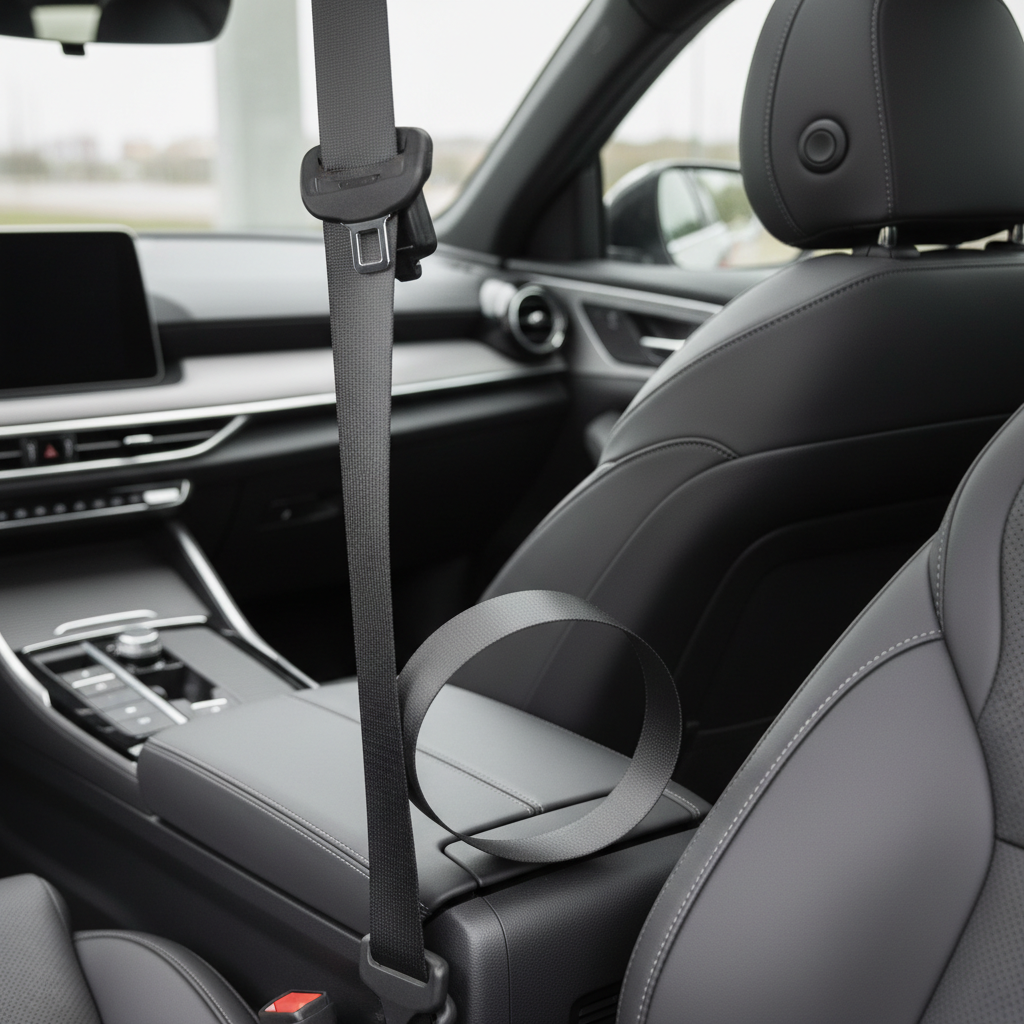
I’m going to help you narrow down what’s happening, try the fixes that often work without parts, and call out the moments when it’s smarter to stop and get a pro involved. Seat belts are safety equipment, so the goal is “reliable and repeatable,” not “kinda works if you jiggle it.”
Why a seat belt won’t retract (what usually goes wrong)
Most seat belts that won’t pull back aren’t “broken” in a dramatic way, they’re compromised by friction, misalignment, or a retractor that thinks you’re in a crash. Common causes look like this:
- Dirt, soda, body oils, or grit on the webbing creates drag through the plastic guides and the retractor slot.
- Twisted webbing increases thickness and friction, especially around the shoulder loop.
- Vehicle angle or retractor lock: many retractors lock when the car is on a slope, a wheel is on a curb, or the belt is pulled quickly.
- Webbing pulled too far out can trigger the automatic locking mode in some setups (common after installing a child seat).
- Weak or damaged retractor spring inside the spool, the belt retracts slowly or stops short.
- Trim interference: a pinched belt behind a seat, under a plastic panel, or caught in a seat track.
According to NHTSA, seat belts are one of the most effective safety features in a vehicle, so if the belt can’t extend and retract normally, treat it as a safety defect, not just a comfort problem.
Quick self-check: figure out which problem you have in 3 minutes
Before cleaning or taking panels apart, do a fast diagnosis. It saves time and helps you avoid “fixing” the wrong thing.
A simple checklist
- Does it retract normally when the car is on level ground? If yes, the retractor may be locking due to angle.
- Does the belt retract better when you feed it back slowly by hand? If yes, friction is likely the issue.
- Do you feel a hard stop and hear clicking? That can be a locked retractor or automatic locking mode.
- Is the webbing twisted anywhere between the shoulder guide and the latch plate? Even one twist can cause problems.
- Is the belt edge fuzzy, stiff, or sticky? That points to contamination or wear.
- Does it fail only with the seat in a certain position? Look for pinching in the seat track or trim.
If the belt looks cut, heavily frayed, burned, or has been involved in a serious collision, skip the DIY path and jump to the “get professional help” section.
Step-by-step: fixes that often work (no special tools)
These are the practical steps people use when they search how to fix seat belt not retracting. Start with the least invasive option and stop if you notice damage.
1) Untwist and re-route the webbing
- Pull the belt all the way out gently and keep it flat.
- Inspect the shoulder loop and the latch plate area for a hidden half-twist.
- Feed it back in slowly, keeping light tension so it spools evenly.
Small detail that matters: if the belt feeds in while folded over, it can stack unevenly on the spool and keep feeling “weak” even after you remove the twist.
2) Reset a locked retractor (angle and technique)
- Park on the flattest surface you can.
- Sit upright, keep the belt close to its normal path, then pull out slowly.
- If it’s stuck, give a small amount of slack back in, then try again slowly.
Many retractors are designed to lock when the belt is pulled sharply. A slow, steady pull is often the difference between “stuck” and “normal.”
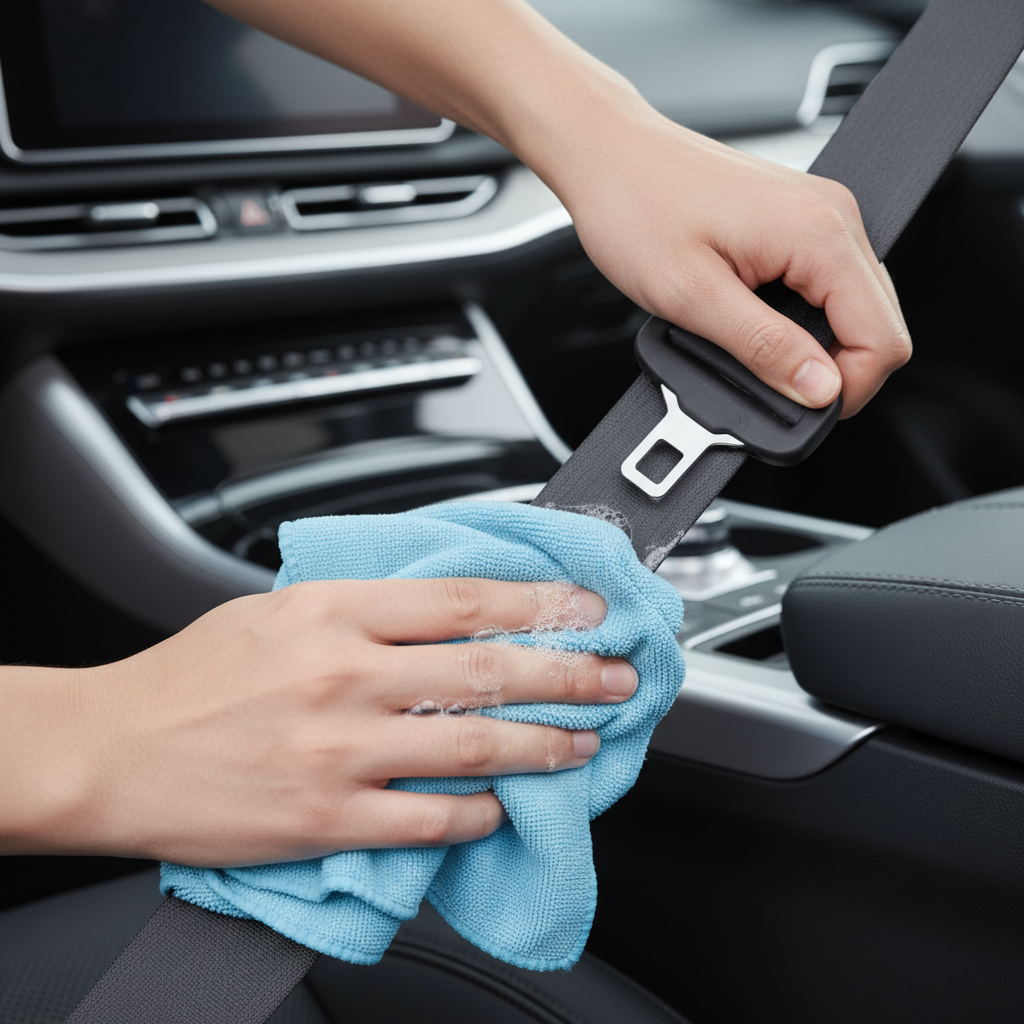
3) Clean the belt webbing (the fix that surprises people)
Cleaning reduces friction, and friction is a common reason belts retract slowly. Keep it gentle: harsh chemicals can damage fibers.
- Pull the belt out as far as it goes and clip it so it can’t retract (a spring clamp works).
- Mix warm water with a small amount of mild soap.
- Wipe both sides with a microfiber towel, then wipe again with clean water.
- Let it air-dry fully before allowing it to retract.
Avoid bleach, strong solvents, or saturating the retractor area, you want the webbing clean, not the mechanism soaked.
4) Check the shoulder guide and trim for rubbing
- Look at the plastic shoulder loop where the belt changes direction.
- Inspect for burrs, broken plastic, or a missing trim piece that makes the belt scrape.
- If the belt rubs hard at one point, reposition the height adjuster (if equipped) and re-test.
If the trim is cracked or sharp, it can chew up the webbing over time, which is a safety concern, not just a retraction issue.
When “it retracts, but barely”: what that usually means
Slow retraction is the classic in-between problem. It’s not fully stuck, but it doesn’t reliably snug up. In many cases:
- Light contamination makes the belt feel sluggish even after you untwist it.
- Cold weather can make some belts feel stiffer, but it shouldn’t stop retraction entirely.
- Spring fatigue in the retractor can show up as “needs a hand to finish.”
If cleaning and routing help for a day then the problem returns, the mechanism may be wearing out, or the belt is still stacking unevenly on the spool.
DIY vs shop fix: what’s realistic (and what isn’t)
People ask about opening the retractor to “rewind the spring.” Real talk: that’s where DIY gets dicey. A retractor is a safety-critical assembly, and many vehicles integrate pretensioners (small pyrotechnic devices) with the belt system.
According to IIHS, proper restraint function is critical for crash protection; if the belt system is compromised, the safest path often involves inspection or replacement rather than improvised repairs.
A quick decision table
| Symptom | Likely Cause | Try at Home | Go to a Pro |
|---|---|---|---|
| Won’t retract after someone spilled a drink | Sticky webbing / friction | Gentle cleaning, dry fully | If still sluggish after cleaning |
| Locks and won’t pull out on a driveway slope | Locking sensitivity / angle | Move to level ground, slow pull | If it locks on flat ground too |
| Retracts halfway then stops | Twist, trim rub, uneven spool | Untwist, re-feed slowly, check guides | If webbing shows damage |
| Very slow, needs help every time | Spring fatigue / internal wear | Clean + routing check | Often yes, retractor replacement |
| After a crash or airbag deployment | Pretensioner engaged, internal damage possible | No | Yes, inspection/replacement |
Common mistakes that make the problem worse
- Letting the belt snap back: it can worsen uneven spooling and stress the mechanism.
- Using harsh cleaners: bleach and strong solvents may weaken webbing fibers.
- Oiling the belt or retractor: lubricants attract dirt and can contaminate components.
- Ignoring fraying: if the belt edge is damaged, retraction is not the only issue anymore.
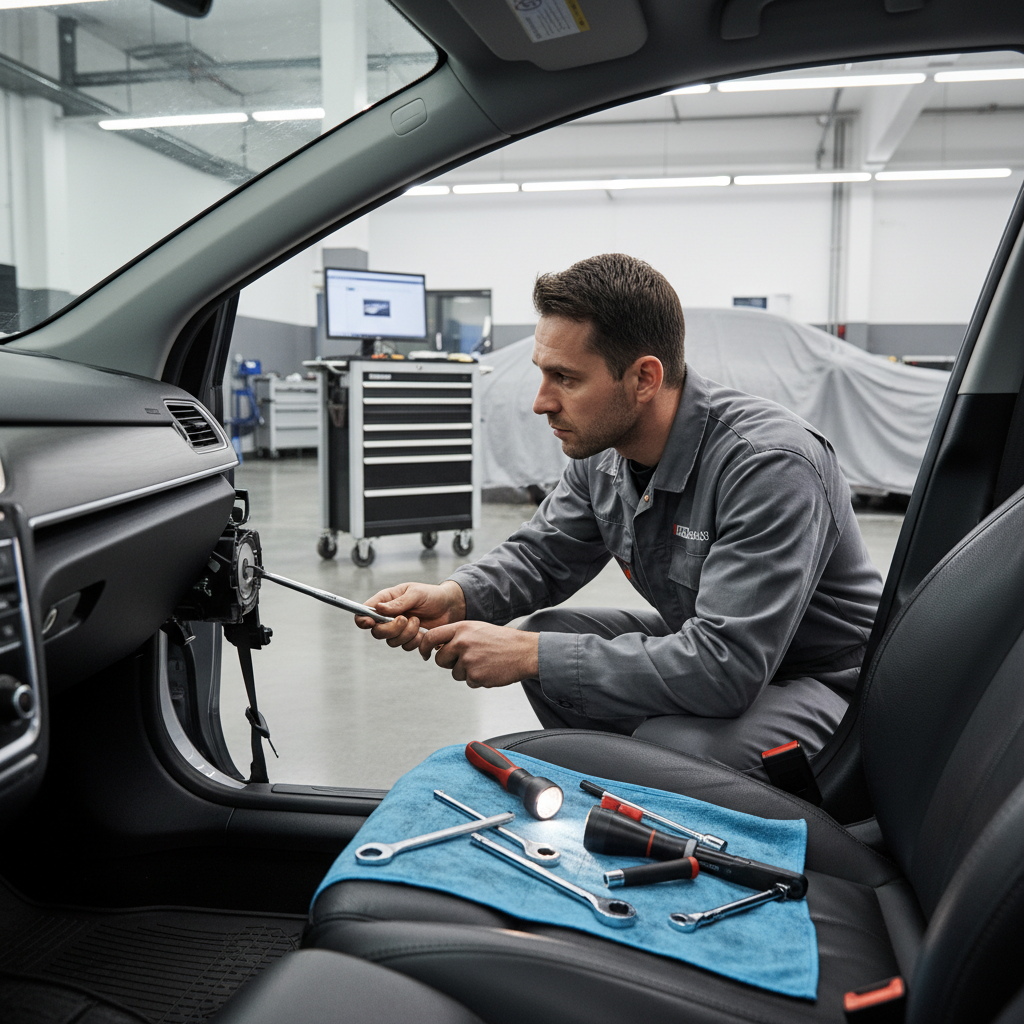
- Taking the retractor apart without service guidance: springs and pretensioners can be hazardous, and reassembly errors can compromise safety.
When you should stop and get professional help
If any of the situations below match, it’s usually smarter to have a qualified shop or dealer inspect it. Not because DIY is “bad,” but because the downside of a wrong fix is high.
- After any moderate or severe crash, even if the belt “looks fine.”
- Airbag light is on or the SRS system has faults (seat belts may be part of that system).
- The belt won’t extend at all, or locks unexpectedly on flat ground with gentle pulls.
- Webbing damage: cuts, heavy fraying, burn marks, or melted/stiff sections.
- Repeated failure after cleaning and re-feeding, suggesting internal wear.
If you’re unsure, ask a professional for an inspection recommendation for your specific make and model, service procedures vary and the safest route depends on the vehicle’s restraint design.
Practical takeaways (so you can act today)
- Start simple: untwist, re-route, and test on level ground.
- Clean the webbing gently and let it dry completely before retracting.
- Don’t lubricate the belt or retractor as a “quick fix.”
- Escalate quickly if there’s webbing damage, crash history, or SRS concerns.
If you want a clean workflow, do one change at a time and retest. That’s the easiest way to know what actually fixed the seat belt not retracting problem, instead of guessing.
Conclusion: get it retracting smoothly, then verify it’s trustworthy
If your goal is simply how to fix seat belt not retracting, the highest-value path is usually: confirm it isn’t locked, remove twists, clean the webbing, then check for rubbing at the guides. When that doesn’t restore smooth retraction, treat it as a likely retractor issue and get it inspected, especially if there’s any crash history.
Your next step: try the level-ground reset and a careful cleaning today, then do a short “buckling routine” check over a few drives. If it still needs help retracting, schedule a shop visit, you’ll get peace of mind and a belt that behaves the same way every time.