
Best car portable tire inflator digital gauge searches usually come from one annoying moment, the low-tire light turns on, you’re not near a gas station, and you’re not even sure the gauge you have is telling the truth.
A good portable inflator with a digital gauge is less about “cool gadgets” and more about getting to a safe PSI quickly, without guesswork, and without cooking the unit or draining your car battery.
This guide breaks down what actually matters when you shop, how to sanity-check accuracy, and how to match an inflator to your tire type, from compact sedans to SUVs and light trucks.
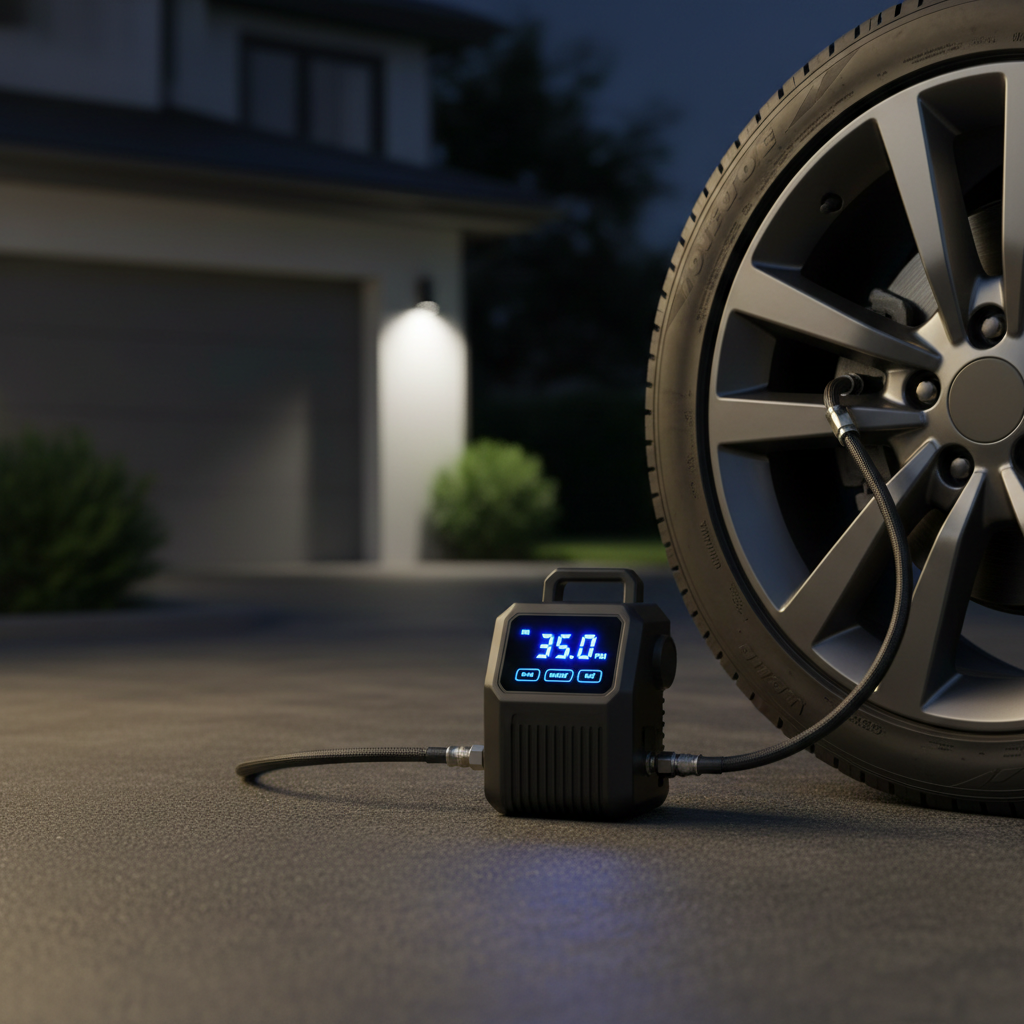
What makes a digital-gauge tire inflator “the best” for your car
Most inflators can push air, the differences show up in everyday friction, how long it takes, whether the reading is trustworthy, and how annoying it is to use on the side of the road.
- Real-world speed (not just max PSI): Many units advertise high PSI, but what you feel is how fast it goes from, say, 28 to 35 PSI.
- Gauge accuracy and consistency: A digital screen is convenient, but not automatically precise, you want repeatable readings.
- Duty cycle: How long it can run before it needs a cool-down, this matters more for larger tires or topping up multiple tires in one session.
- Power setup: 12V plug-in (car outlet), battery-powered, or hybrid, each has tradeoffs.
- Hose and cord length: Too short and you’re dragging the unit around the car or stretching cables in awkward ways.
- Nozzle style: A screw-on Schrader chuck often seals better, while a clamp-style can be faster but fussier with leaks.
- Auto shutoff: Helpful for hitting target PSI, but only if the gauge is reasonably accurate.
According to NHTSA... proper tire inflation supports vehicle handling and helps reduce the risk of tire-related incidents, which is the practical reason inflator quality isn’t just a convenience issue.
Quick comparison table: choosing the right type
If you just want a clean short-list in your head, this table usually gets people to the right aisle fast.
| Inflator type | Best for | Pros | Watch-outs |
|---|---|---|---|
| 12V plug-in (cigarette lighter) | Most daily drivers, occasional use | Unlimited runtime (engine on), usually affordable | Cord reach, outlet fuse limits, can be slower on larger tires |
| Battery-powered (rechargeable) | Apartments, roadside convenience, quick top-offs | No cord to car, easy handling | Battery aging, may struggle with multiple large tires |
| Hybrid (battery + 12V) | People who want one tool for everything | Flexible, better backup options | Costs more, check included cables and charging |
| Compact “emergency” inflator | Trunk backup, rare use | Small footprint | Often louder, shorter duty cycle |
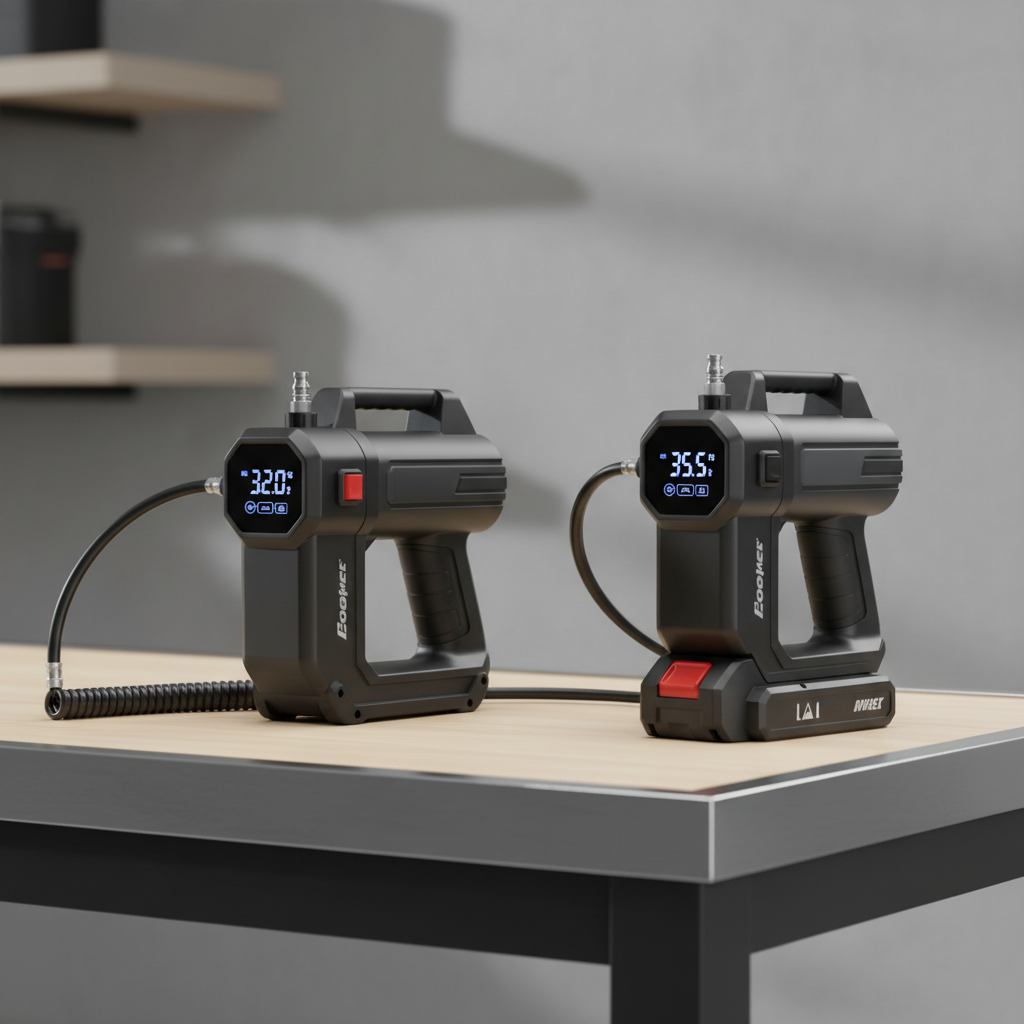
Key specs that actually matter (and the ones that mislead)
Specs can feel like marketing soup, so here’s the short version: you’re buying fill speed + reliability + usability, not a giant PSI number.
Specs worth paying attention to
- Airflow rating (often listed as L/min or CFM): Higher airflow usually means faster fills, but brands measure differently, so treat it as directional.
- Duty cycle: If you drive an SUV or light truck, look for longer runtime or clear cool-down guidance.
- Accuracy tolerance: Many brands don’t publish it, but if they do, it’s a strong sign they take the gauge seriously.
- Auto stop + easy setpoint: You want to set 35 PSI once and let it finish without babysitting.
- Heat management: Metal fittings and a stable base matter when the unit gets hot.
Specs that often mislead
- Max PSI: Most passenger tires need roughly 32–44 PSI, max PSI doesn’t tell you how fast it fills.
- “Heavy-duty” labels: Without duty cycle and airflow, the phrase is vague.
- Peak power claims: For 12V units, your car outlet and wiring limits matter more than a big number on the box.
According to AAA... tire-related issues are a common roadside problem category, which is why an inflator that’s quick to deploy tends to get used, and one that’s finicky sits in the trunk unused.
How to tell if the digital gauge is accurate enough
The uncomfortable truth: two “digital” gauges can disagree, and both can be wrong. What you need is not lab calibration, but repeatable, close-enough readings so you don’t underinflate or overinflate.
- Cross-check once: Compare the inflator’s reading with a separate, decent-quality tire pressure gauge you trust.
- Check cold tires: Pressure rises after driving, so test accuracy first thing in the morning or after the car sits.
- Look for consistency: Measure the same tire twice in a row, large swings hint at a leaky chuck or a flaky sensor.
- Watch the last 1–2 PSI: Many budget units overshoot a little, learning the behavior is often more useful than obsessing over one perfect number.
If you see persistent mismatches, don’t assume your car’s TPMS is wrong, some systems report pressure with smoothing or delays, and the safest move is to verify with a known-good manual gauge or ask a tire shop to check.
Practical buying checklist (match the inflator to your vehicle)
Before you hit “add to cart,” take 60 seconds and match the inflator to your actual tires and habits, this is where most people avoid buyer’s remorse.
- Your tire size: Larger tires usually need more airflow and better duty cycle.
- Where you’ll use it: Apartment parking lots favor battery or hybrid units, long road trips favor 12V reliability.
- How many tires you expect to top up: One slow leak on one tire is different from seasonal pressure changes across all four.
- Valve access: Some wheels make straight chucks awkward, a flexible hose helps.
- Night use: A decent work light helps, but don’t buy for the flashlight alone.
- Noise tolerance: Many are loud, if you’ll use it around neighbors, look for reviews mentioning sound.
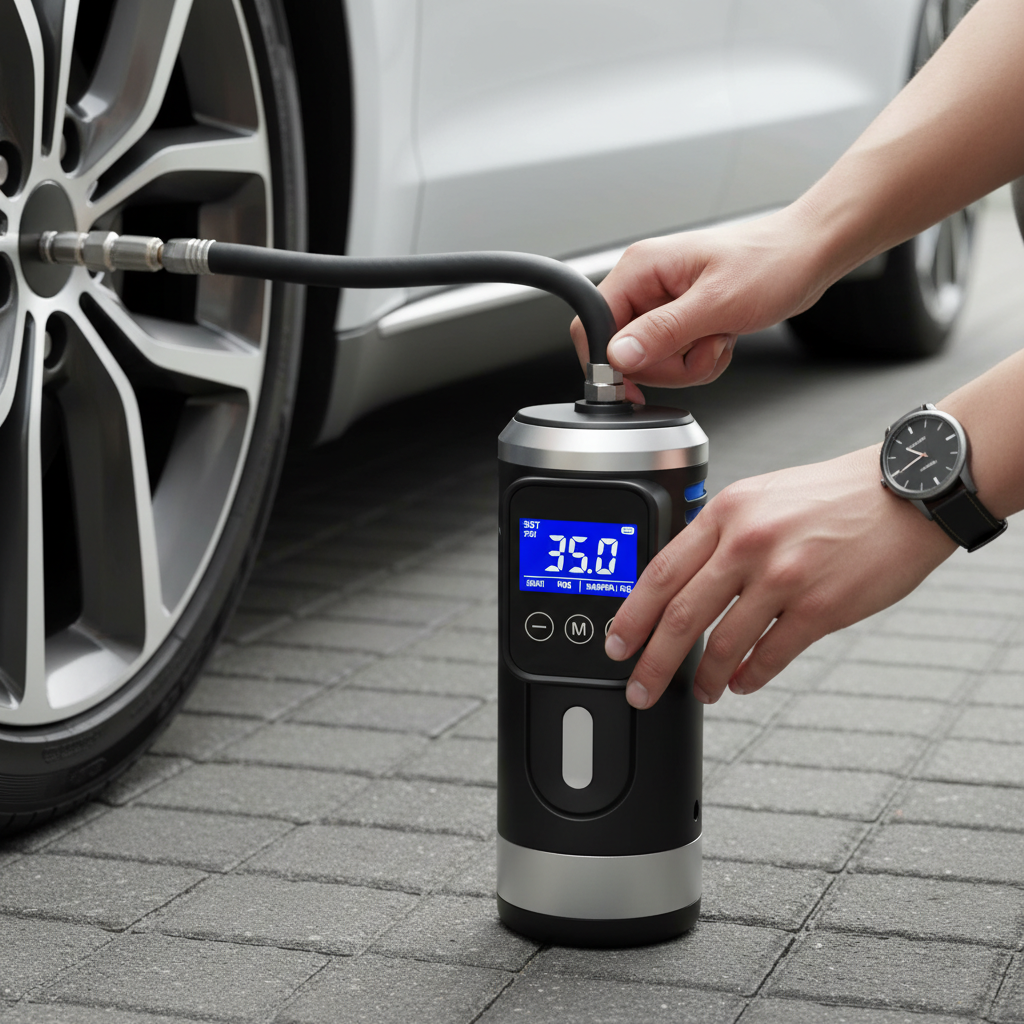
How to use a portable inflator with digital gauge (step-by-step)
This is the routine that keeps readings cleaner and reduces the odds of damaging the unit.
- Find the correct PSI: Use the driver door jamb sticker, not the tire sidewall, sidewall lists maximum rating, not your recommended setting.
- Start with cold tires: If you just drove, your pressure may read higher than baseline.
- Connect firmly: Screw-on chucks should seat fully, clamp chucks should lock without wobble.
- Set target pressure: Use the digital setpoint if available, then let auto stop do the work.
- Run in short sessions for big jobs: If the housing gets very hot, follow the cool-down guidance.
- Re-check once: After disconnecting, reattach quickly and confirm you hit the target PSI.
- Store smart: Coil hoses loosely, avoid crushing the unit under heavy cargo, and keep adapters in the bag.
For 12V inflators, it’s often safer to keep the engine running so voltage stays stable, but if you’re unsure about your vehicle’s outlet rating or fuse, checking the owner’s manual or asking a mechanic is a reasonable precaution.
Mistakes that waste time (or create safety issues)
A lot of frustration comes from a few predictable missteps, and they’re easy to avoid once you know them.
- Filling to the sidewall max: That number isn’t your recommended pressure, using it can change handling and ride, and may not be appropriate.
- Ignoring duty cycle: Overheating can shorten motor life, and in some cases may trip thermal protection mid-fill.
- Using sealant without a plan: Tire sealant can clog valve cores and complicate repairs, it’s sometimes necessary, but ideally coordinate with a tire professional.
- Chasing TPMS readings in real time: Some systems update after driving, so trust your gauge for the immediate adjustment.
- Not checking for slow leaks: If you’re inflating the same tire every few days, it’s time for a proper inspection.
According to U.S. Department of Energy... keeping tires inflated to the proper pressure can support fuel economy, which is a nice side benefit, but the bigger win is predictable braking and steering behavior.
Conclusion: what to buy, and what to do next
If you want the best car portable tire inflator digital gauge experience in real life, prioritize a model with dependable airflow, a sensible duty cycle, a chuck that seals without drama, and a digital display you can verify once and then trust day to day.
Two simple next steps usually pay off fast, pick an inflator type that matches how you park and drive, then cross-check its gauge against a separate tire gauge one time so you know your baseline.
FAQ
What should I look for in the best car portable tire inflator digital gauge for an SUV?
SUV tires often need more air volume, so prioritize airflow and duty cycle over max PSI, and make sure the cord and hose reach all four wheels without tugging.
Are digital tire inflator gauges more accurate than analog?
Sometimes, but not always. Digital is easier to read, accuracy depends on the sensor quality and calibration, which is why a one-time cross-check helps.
Can I use a 12V tire inflator with the car turned off?
In many cases yes for a quick top-off, but longer runs can drain the battery. If you’re filling multiple tires, keeping the engine on is often safer, within your vehicle manual guidance.
Why does my TPMS light stay on after I inflate my tires?
Some TPMS systems update after driving for a bit, and some require a reset procedure. If pressures are correct and the light persists, a tire shop can scan for sensor issues.
How often should I check tire pressure if I have an inflator in the trunk?
A monthly check is a common habit, plus before road trips or big temperature swings. If you notice repeated drops, get the tire inspected for punctures or bead leaks.
What PSI should I set on the inflator’s auto shutoff?
Use the door jamb placard recommendation for front and rear, they can differ. If your inflator tends to overshoot slightly, setting 1 PSI lower and rechecking may help.
Is it okay to rely on a portable inflator for a completely flat tire?
It depends on why it’s flat. If there’s a significant puncture or sidewall damage, it may not hold air, and driving could be unsafe, calling roadside assistance or visiting a tire professional is the safer route.