
Best car window washer fluid for winter freeze usually comes down to one thing: can it stay liquid at your real-world temperatures without smearing, clogging, or cracking parts of the system.
If you drive in snow-belt states, park outside overnight, or hit slush on highways, washer fluid stops being a small detail and turns into a visibility issue, fast. When it freezes in the reservoir or lines, you lose the one tool that clears salt film and road spray at speed.
This guide helps you pick the right winter formula, understand the temperature ratings on the jug, and avoid the common mistakes that make even “winter” fluid perform badly. I’ll also share a quick decision checklist, plus practical steps for switching fluids without headaches.
What “winter freeze” protection actually means
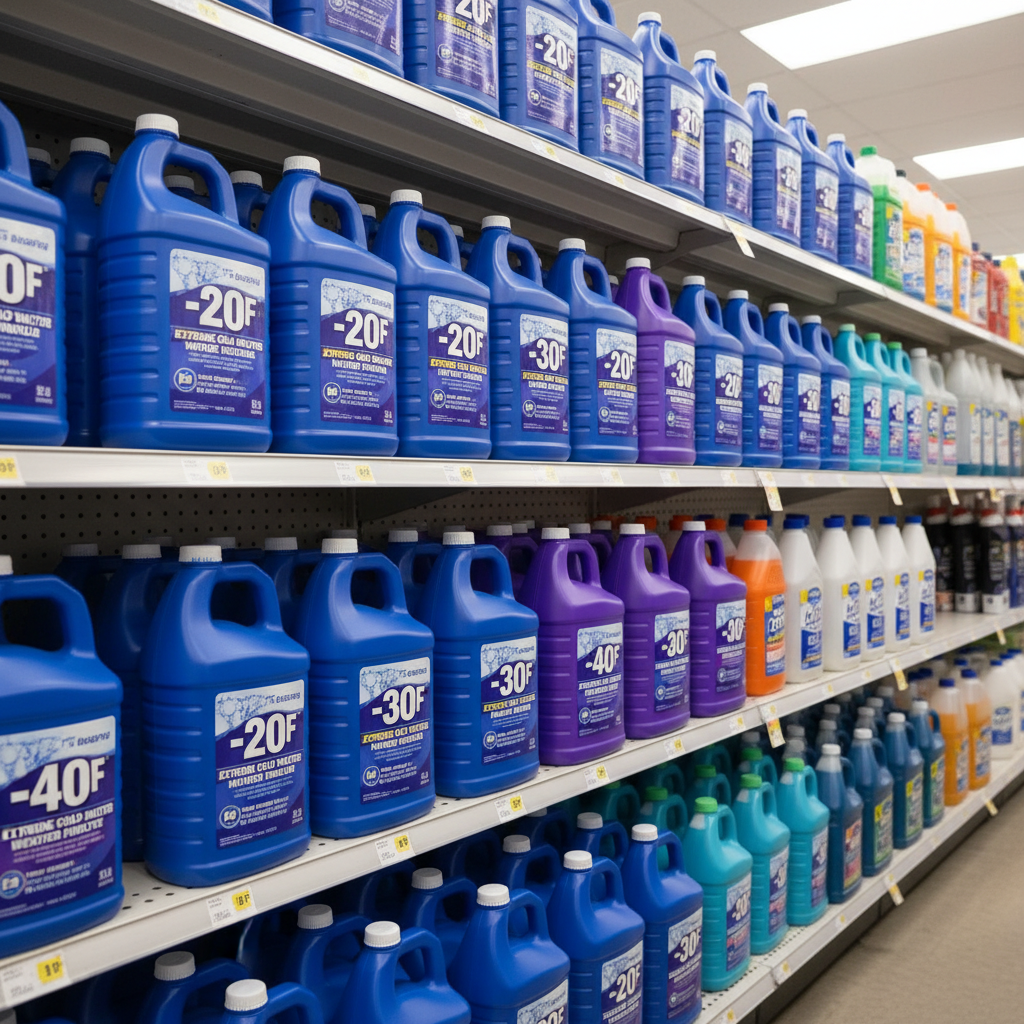
Most winter washer fluids prevent freezing by using alcohols, commonly methanol, blended with water and detergents. The “-20°F” or “-30°F” label is a lab-based freeze point, not a guarantee you’ll never have trouble in the real world.
Real-world freezing issues often show up earlier because:
- Wind chill cools exposed lines and nozzles, especially at highway speeds.
- Dilution happens if you top off with water or mix warm-season fluid in the tank.
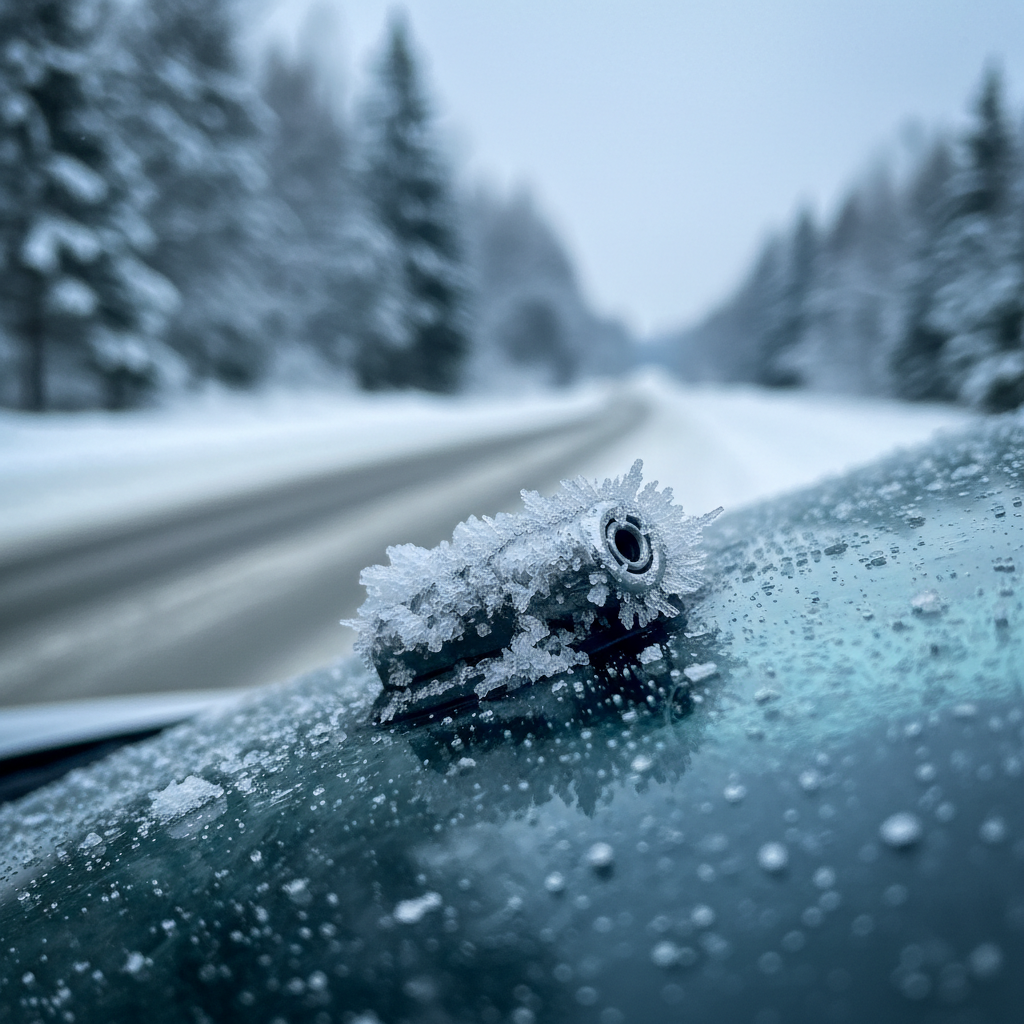
- Slush and salt can clog spray tips even when the fluid itself stays liquid.
- Weak pumps or worn check valves can make a “freeze” problem feel worse than it is.
According to NHTSA, clear visibility is a core part of safe driving, and any impairment in seeing the road increases crash risk. Washer fluid is basic, but in winter it’s part of keeping the windshield usable when conditions change minute to minute.
How to choose the best washer fluid for your winter temperatures
To choose the best car window washer fluid for winter freeze, match the temperature rating to where the car actually lives at night, not just daytime highs. If you park in a garage, you can often get away with a milder rating than someone parking curbside.
Use this quick “temperature fit” guide
- Down to 10°F: “All-season” may work, but winter blend is still safer for road salt and slush.
- Down to -10°F: Look for a rated winter fluid around -20°F (gives some buffer).
- Down to -20°F: Choose -30°F rated winter fluid, avoid any dilution.
- Below -20°F or mountain overnight parking: Consider -35°F or -40°F products if available locally, and keep the tank near full.
One practical tip: if your area swings temperatures a lot, buy the stronger rating early. Many people only upgrade after their system already froze once, and that’s when lines and nozzles tend to crack.
Key features that matter (and a few that don’t)
Marketing labels get noisy in this category. For winter driving, a few features genuinely matter, and a few are mostly preference.
- Low-temperature rating: The primary filter. Buy for worst-night, not average-day.
- De-icer performance: Helpful for light frost, but it won’t replace a proper ice scraper in heavy glaze ice.
- Anti-streak cleaning: Better detergents reduce the “milky smear” from road film and washer waxes.
- Nozzle friendliness: Formulas that resist gelling help reduce partial spray patterns in deep cold.
- Wiper compatibility: Some fluids can make worn rubber chatter more, so condition matters.
What matters less than people think: “Bug remover” claims in winter. If you’re driving in true winter weather, salt and grime are the main enemies, not insect residue.
Winter washer fluid options, compared
Instead of naming a single “winner,” it’s more honest to match fluid type to your conditions. In many garages and big-box stores, the product families look similar, but the ratings and mix quality vary.
| Option type | Typical rating | Best for | Tradeoffs |
|---|---|---|---|
| All-season washer fluid | About 32°F to 0°F | Mild winters, garage parking | Can freeze in lines/nozzles, weaker against salt film |
| Winter blend “de-icer” | -20°F | Most Midwest/Northeast daily driving | Can still struggle if diluted or in extreme cold |
| Severe winter blend | -30°F to -40°F | Overnight outdoor parking, northern plains, mountain towns | Stronger odor, higher alcohol content, usually higher cost |
| Concentrate (mix yourself) | Depends on mix ratio | Fleet use, controlled mixing | Easy to mix wrong, wrong ratio reduces freeze protection |
If you’re shopping for the best car window washer fluid for winter freeze and you’re stuck between -20°F and -30°F, the -30°F option is usually the safer buy for outdoor parking, because any leftover summer fluid in the system effectively raises the freeze point.
Self-check: why your washer system freezes (or stops spraying)
Before you blame the fluid, do a quick sanity check. A lot of “frozen fluid” reports are really mechanical or clogging problems that cold weather exposes.
- No sound from pump: Could be a fuse, wiring, or pump failure, not a freeze issue.
- Pump sound but no spray: Often frozen lines/nozzles, or a clogged filter screen at the pump inlet.
- Weak spray pattern: Partial nozzle icing, kinked line, or check valve sticking.
- Sprays, but instantly ices: Extremely cold glass, strong wind, or fluid rating not low enough.
- Smears badly at night: Dirty windshield, worn wipers, or a fluid that leaves residue on cold glass.
Also check your wipers. Winter fluid can’t compensate for rubber that’s torn, hardened, or streaking from age.
Practical steps: switching to winter fluid without causing problems
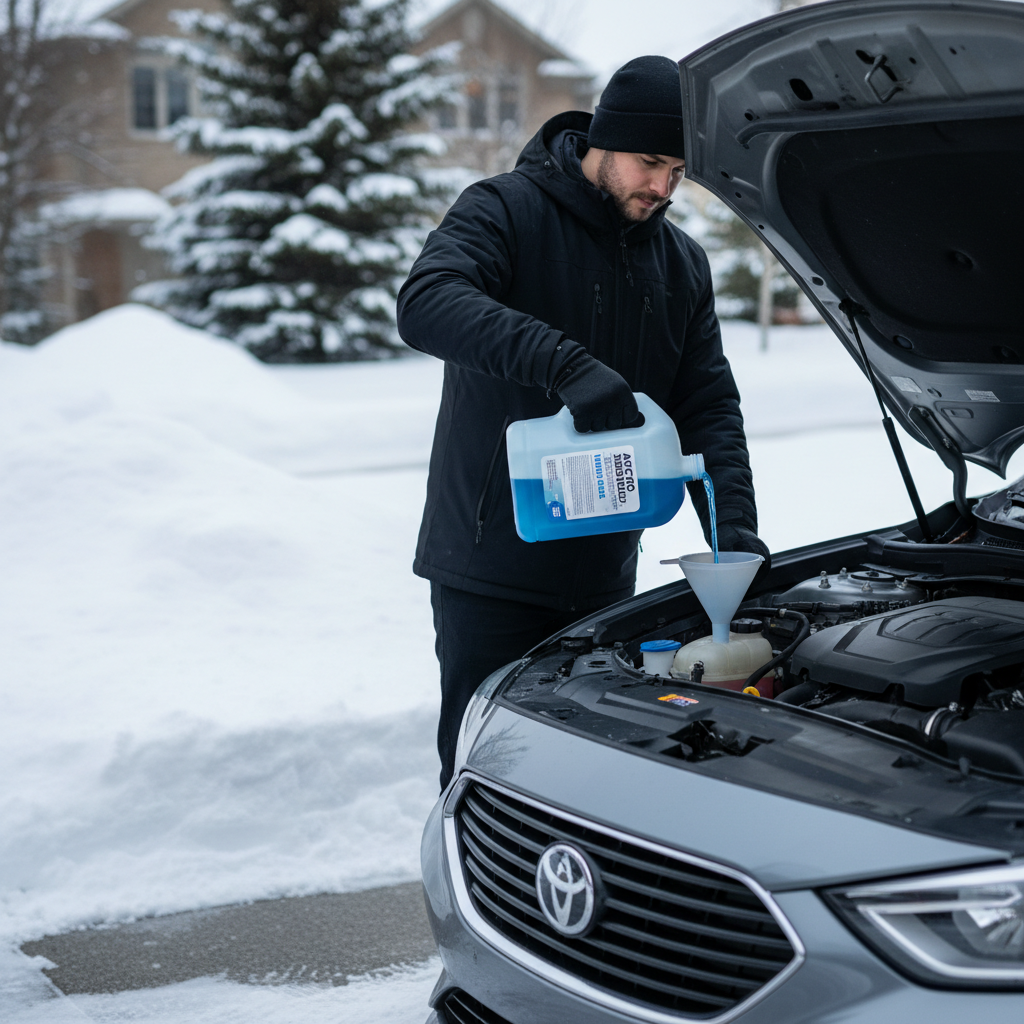
If your tank still has warm-weather fluid, don’t just pour winter fluid on top and hope. Mixing can reduce freeze protection, and in cold snaps that’s when lines lock up.
A simple switch-over method
- Step 1: Run the old fluid down until the low washer light comes on, or until the tank is clearly low.
- Step 2: Fill with winter-rated fluid matched to your coldest nights.
- Step 3: Purge the lines by spraying for 10–20 seconds total (in short bursts) so winter blend reaches the nozzles.
- Step 4: Wipe the glass if you see residue, then retest spray pattern.
If the system already froze, avoid forcing it. In many cases, moving the car into a warmer garage and waiting is safer than running the pump dry. If you’re not sure what’s frozen, a mechanic can inspect lines and the pump without guesswork.
Common mistakes that make winter washer fluid underperform
These are the habits that quietly defeat even good products.
- Topping off with water: Even a small amount can raise the freeze point enough to create nozzle ice.
- Buying based on “de-icer” alone: Temperature rating still matters more than the label language.
- Letting the tank run nearly empty: Low volume freezes faster and can pull slush into the pickup area.
- Ignoring the windshield: Heavy interior haze or exterior film makes winter glare worse, even with perfect spray.
- Assuming streaks mean “bad fluid”: Often it’s old wipers, a dirty blade edge, or waxy residue on glass.
Key takeaway: the best car window washer fluid for winter freeze can’t do much if it never reaches the nozzles, so the switch-over purge and avoiding dilution matter as much as what you buy.
Safety, compatibility, and when to get professional help
Most winter fluids use alcohol-based blends that are flammable and can irritate skin or eyes, so handle carefully and keep away from kids and pets. If you accidentally ingest any automotive chemical, contacting Poison Control is a safer move than waiting it out. According to Poison Control, quick guidance can matter even when symptoms seem mild.
Compatibility is usually fine with modern vehicles, but there are exceptions. If your car has headlight washers, heated nozzles, or advanced driver-assistance camera housings near the windshield, your owner’s manual may specify certain fluid types.
- Get help if you see leaking under the hood after a freeze, smell strong fluid inside the cabin, or the pump runs loud without output for long periods.
- Consider diagnosis if you’ve confirmed winter-rated fluid and purged lines, but spraying still fails in mild temps.
Conclusion: what to buy and what to do this week
If you want fewer winter surprises, pick a winter-rated product that fits your coldest overnight temps, keep it undiluted, and run it through the system early in the season. That’s the real difference between a jug that “should work” and a setup that actually performs when the road spray turns to salt paste.
This week’s easy wins: check your tank level, replace wipers if they chatter or streak, and switch to a -20°F or -30°F blend before the first serious cold snap hits.
FAQ
What is the best car window washer fluid for winter freeze in very cold states?
In many very cold areas, a severe winter blend rated around -30°F (or lower, if your region regularly dips beyond that) is the practical choice, especially if the car parks outside overnight.
Can I mix winter washer fluid with summer washer fluid?
You can, but performance often drops because the final mixture has a higher freeze point than the winter jug rating. If you’re heading into real cold, it’s smarter to run the tank low, refill with winter blend, then purge the lines.
Why did my washer fluid freeze even though the bottle says -20°F?
Common reasons include dilution with water, leftover warm-season fluid in the tank/lines, or freezing at exposed nozzles during highway driving. A partial clog can also mimic freezing.
Is “de-icer” washer fluid safe for paint and rubber?
Usually yes for normal use, but overspray and grime can still leave residue. If you notice rubber wiper chatter or hazing, cleaning the glass and checking blade condition often helps more than changing brands.
Does winter washer fluid remove ice from the whole windshield?
It may help soften light frost where it sprays, but it won’t replace scraping in heavy ice. Treat it as a support tool for visibility, not your only de-icing method.
What should I do if my washer nozzles are iced over?
Warming the vehicle in a garage or waiting for temperatures to rise is often safer than forcing the pump. If the problem repeats, check fluid rating, dilution, and nozzle clogging.
Should I use washer fluid concentrate in winter?
Concentrate can work well when mixed correctly, but it’s easy to miscalculate ratios. If you want less guesswork, pre-mixed winter fluid is usually simpler for most drivers.
If you’re trying to pick the right winter blend but you’re not sure what temperatures your commute really sees, or you want a quick checklist tailored to garage vs outdoor parking, a local auto parts counter or trusted shop can point you toward a rating that fits your area without overbuying.