
how to diagnose car bad starter motor symptoms usually comes down to one question: is the engine failing to crank because the starter can’t do its job, or because power and signals never reach it.
If you’ve ever turned the key and got a click, a slow groan, or total silence, you already know how stressful this is, especially when it happens in a parking lot or right before work. The tricky part is that a weak battery, corroded cables, a bad relay, or even a security system issue can mimic starter trouble.
This guide walks you through a practical, no-drama way to separate “starter motor problem” from “everything around the starter.” You’ll get a symptom-to-cause table, a quick self-checklist, and a few safe driveway tests that help you decide what to do next.
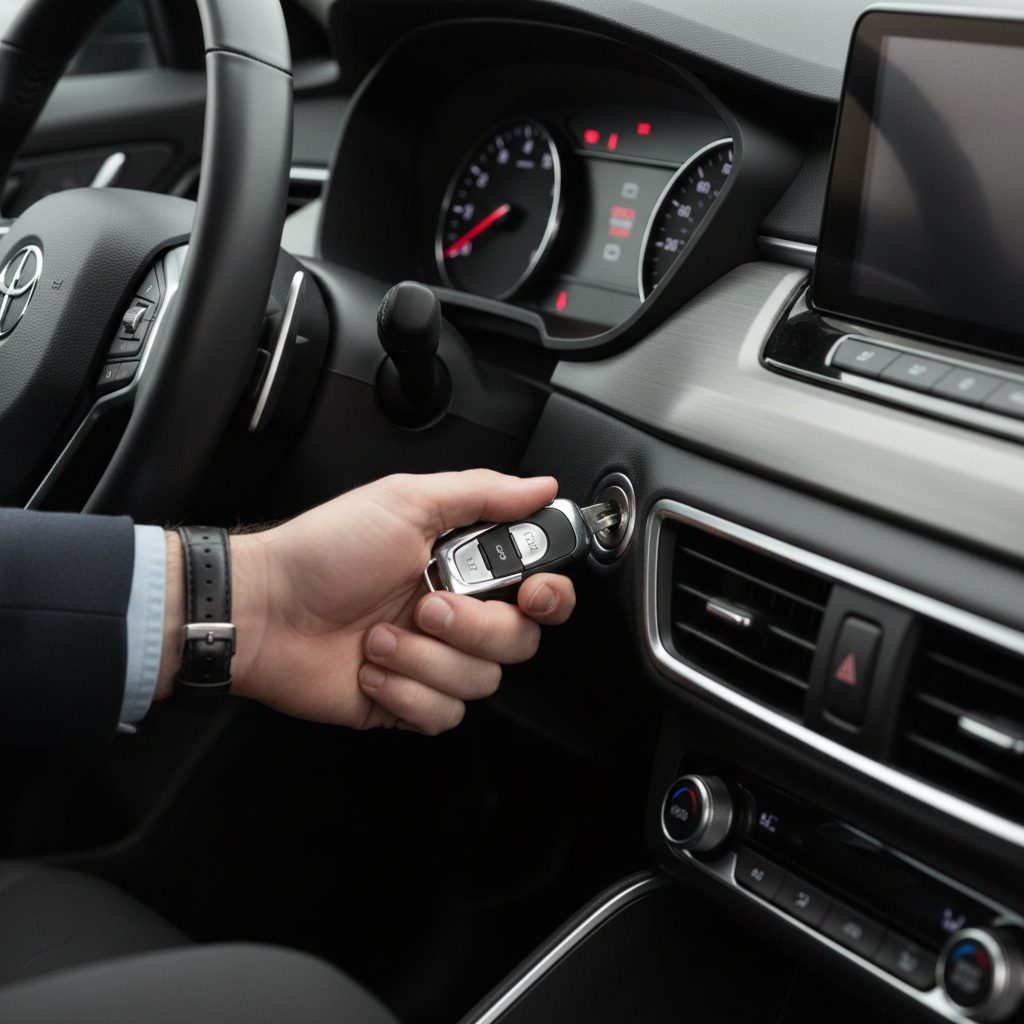
Starter motor basics (so the symptoms make sense)
The starter motor is an electric motor that spins the engine for a few seconds so it can fire and run on its own. When you turn the key or press the start button, several things must happen in sequence: the battery supplies power, the ignition switch or start button sends a request, a relay or solenoid engages, and the starter spins the engine.
When any link in that chain fails, the car may not crank. The reason people misdiagnose starters is simple: many “starter symptoms” are actually battery voltage drop, cable resistance, or a control-signal problem.
According to NHTSA, if a vehicle stalls, will not start, or behaves unpredictably in traffic, moving to a safe location and requesting assistance is recommended rather than repeatedly attempting risky restarts on the roadway.
Common bad starter symptoms and what they usually point to
Here are the patterns you’ll see most often. Use this as a map, not a verdict.
Quick symptom-to-cause table
| What you notice | What it often means | Other common look-alikes |
|---|---|---|
| Single loud click, no crank | Starter solenoid engages but motor doesn’t spin, or insufficient current | Weak battery, corroded terminals, bad ground strap |
| Rapid clicking | Voltage drops too low under load | Battery near-dead, loose terminal connection |
| Slow cranking (rrr…rrr…) | Starter drawing too much current or low battery power | Cold weather battery weakness, thick oil, poor cable condition |
| Whirring sound, engine not turning | Starter spins but doesn’t engage flywheel (bendix/drive issue) | Damaged flywheel teeth (less common), wrong starter installed |
| Intermittent no-crank, starts later | Heat-soaked starter, worn brushes, failing solenoid contacts | Failing relay, neutral safety switch, key fob/immobilizer issues |
| Smoke smell or hot electrical odor | Starter overheating or wiring short/high resistance | Battery cable short, aftermarket wiring problem |
Key point: a bad starter is more likely when the battery tests healthy, lights stay strong, you hear a solid click, and the problem shows up hot or intermittently.
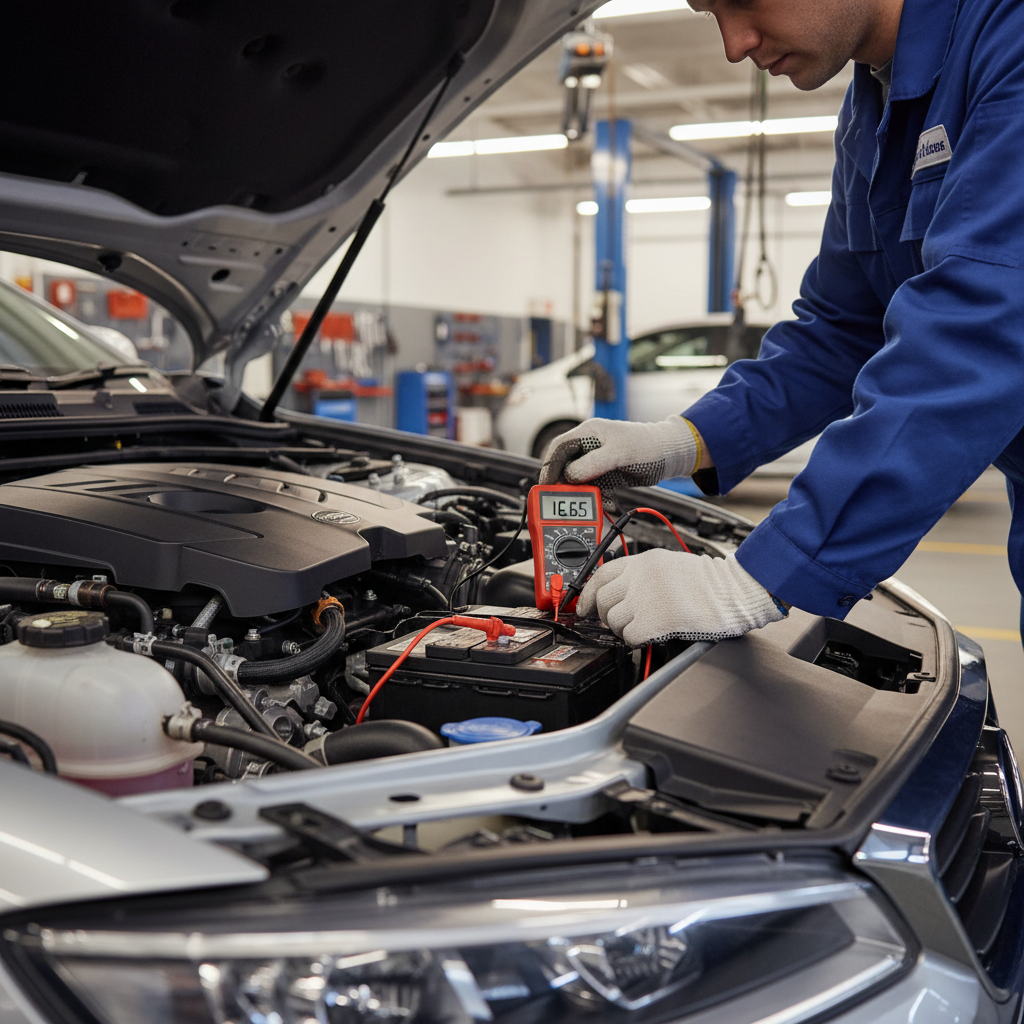
Self-check checklist before you blame the starter
Before you crawl under the car or order parts, run these quick checks. They catch a lot of “false starter failures.”
- Dashboard lights and headlight strength: if they go very dim when you attempt to start, suspect battery or cable resistance.
- Battery terminals: look for white/green crust, loose clamps, or damaged cables. Corrosion can pass enough power for lights but not for cranking.
- Try Neutral: on automatics, attempt start in Neutral as well as Park. A worn range selector or neutral safety switch can block the start signal.
- Listen carefully: one click vs rapid clicks vs spinning whir tells different stories.
- Check for security/immobilizer clues: flashing security light or “key not detected” can stop cranking on some models.
- Recent battery replacement? a new battery with loose clamps is a classic no-crank setup.
If two or more items above look suspicious, diagnose those first. Many starter swaps happen because the basics were skipped.
Driveway tests that help confirm (or rule out) a bad starter
You don’t need a full shop to narrow this down, but you do need to be careful. If you’re not comfortable around moving engine parts, electrical power, or lifting the vehicle, a mobile mechanic or shop diagnosis is the safer call.
1) Battery voltage quick check
A starter needs strong voltage under load. If you have a multimeter:
- Engine off: many healthy batteries read around 12.6V when fully charged, though numbers vary by temperature and battery type.
- During crank attempt: watch for a big drop. If voltage collapses sharply, suspect a weak battery or high resistance in cables.
According to AAA, battery-related problems are a frequent reason for roadside assistance calls, so it’s worth ruling out battery and connections before assuming major components failed.
2) Voltage drop idea (simple version)
Even with a “good” battery, corrosion or a failing cable can starve the starter. A proper voltage drop test measures loss across the positive cable and ground path while cranking. Many DIYers can do a basic version, but if your meter skills are rusty, don’t force it, wrong probing can cause shorts.
Practical takeaway: if terminals look rough, clean and tighten them, then retest starting behavior before moving on.
3) Tap test (only as a clue)
Sometimes a worn starter has internal dead spots. Light tapping on the starter body can temporarily change contact, and the engine may crank once. This is not a fix, it’s a hint that internal wear exists.
- Do this only if you can access the starter safely with the car off, parking brake set, and hands clear of belts and fans.
- If tapping “brings it back,” plan a replacement soon, intermittent failures often get worse.
4) “Click but no crank” control-signal check
If you hear a click, the solenoid may be receiving a signal, but that doesn’t guarantee the starter motor gets enough current. No click at all can point to a relay, ignition switch, start button circuit, brake/neutral interlock, or immobilizer problem.
If your car uses a start/stop button, pay attention to prompts like “Press brake to start” or “Key not detected.” Those messages can save you from replacing the wrong part.
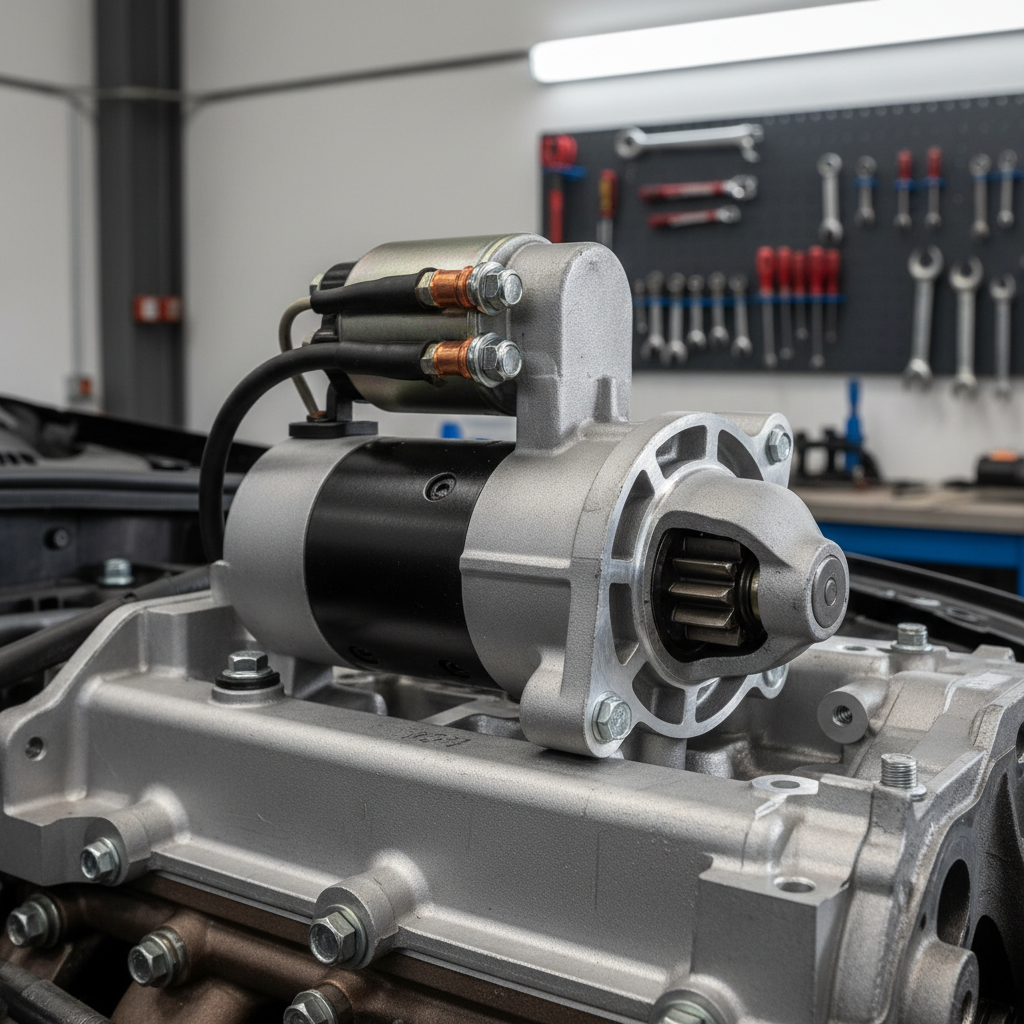
Practical diagnosis paths by symptom (what to do next)
This section is the “if this, then that” part. Pick the path that matches what you’re hearing and seeing.
If you get rapid clicking
- Charge the battery or try a known-good jump, then attempt to start again.
- Inspect and tighten terminals, especially the ground connection to body/engine.
- If it starts with a jump but fails again soon, battery condition or charging system needs attention, not the starter first.
If you get one solid click and nothing else
- Confirm battery and terminals are solid, since low current can still click the solenoid.
- Check for hot-start patterns: works cold, fails after a drive. Heat soak often points toward starter wear.
- If lights stay bright and cables look healthy, the starter motor or solenoid contacts become more likely suspects.
If it cranks slowly
- If temperature is low, remember cold thick oil and a cold battery both increase load, so slow crank isn’t instantly “bad starter.”
- Try with a fully charged battery. If slow crank persists with strong voltage, starter drag or internal wear moves up the list.
If you hear a whirring sound but the engine doesn’t turn
- This often suggests the starter drive gear isn’t engaging the flywheel.
- Stop repeated attempts, grinding can damage teeth and increase repair cost.
- A shop inspection is smart here, because flywheel/ring gear damage can look similar.
Mistakes that waste money (and how to avoid them)
- Replacing the starter without checking the battery under load: a weak battery can “pass” a simple voltage check, then collapse when cranking.
- Ignoring grounds: a poor engine ground strap can create all sorts of weird no-crank symptoms.
- Assuming one click guarantees a bad starter: it can still be a high-resistance connection that lets the solenoid click but starves the motor.
- Continuing to crank with burning smell: stop and inspect, overheating wiring or a stuck starter can escalate fast.
- Over-trusting “intermittent” behavior: intermittent starts often become permanent no-start at the worst time.
When to get professional help (and what to ask for)
If you’re stuck in an unsafe area, smell burning, see smoke, or the engine bay wiring looks damaged, calling for help is the right move. Starter circuits carry high current, and a small mistake can create sparks or melted insulation.
A good shop or mobile tech can run a proper current draw and voltage drop test, then tell you whether the starter is failing mechanically or electrically. When you book service, ask for:
- Battery test results (not just “it’s fine”) and whether the battery was tested under load
- Charging system check if the battery keeps going weak
- Voltage drop findings on both positive and ground sides
- Starter current draw if available, high draw can suggest internal drag
Key takeaways and next steps
If you’re trying to figure out how to diagnose car bad starter motor symptoms, don’t start with parts, start with evidence: battery condition, cable integrity, and the exact sound pattern you hear at the key.
Pick one action today: clean and tighten terminals if they look questionable, then retest, or schedule a diagnostic that includes voltage drop and starter draw. Either way, you move from guessing to confirming, and that usually saves time and money.
FAQ
How do I know if it’s the starter or the battery?
If lights dim hard and you hear rapid clicking, the battery or connections often sit at the center of the problem. If lights stay strong and you get a solid click with no crank, the starter becomes more suspicious, but cables still need a check.
Can a bad starter drain a battery overnight?
Sometimes, but it’s not the most common cause. A starter can drain a battery if the solenoid sticks or there is an electrical fault, though parasitic drain is more often caused by modules, lights, or aftermarket accessories.
What does a single click mean when trying to start?
A single click often means the solenoid tries to engage. That can happen with low current, bad cable connection, or a failing starter motor, so it’s a clue, not a final answer.
Why does my car start fine cold but not after I drive?
Heat can raise electrical resistance and also worsen worn starter internals, so hot no-start is a classic pattern. A professional test right after the failure is the fastest way to confirm it.
Is it safe to keep trying to start the car over and over?
Not usually. Repeated cranking can overheat wiring, damage the starter, and in some cases create smoke or melting insulation. If you smell burning or see smoke, stop and get help.
Can I jump-start a car with a bad starter?
A jump can help if the real issue is low battery voltage. If the starter motor or solenoid has internal failure, extra voltage may not change anything, and it can mislead you if it works only once.
What tools help most for diagnosing starting problems?
A basic multimeter and a good flashlight go a long way. For higher confidence, many technicians use a battery load tester and current clamp to measure starter draw, those tools are common in shops and mobile service vans.
If you’re trying to diagnose a no-crank problem and want a more time-saving route, bringing your symptom notes, the sound pattern, and any voltage readings to a local mechanic or mobile diagnostic service usually leads to a cleaner answer than swapping parts one by one.