
how to check car coolant temperature gauge not working starts with a simple mindset shift: you are not “fixing a gauge,” you are verifying whether the engine is actually warming up, and whether the car can report that temperature correctly.
If the needle stays cold, pegs hot, or jumps around, you lose one of the easiest warnings for overheating. In the real world that can mean anything from a cheap blown fuse to a failing sensor, and occasionally a cooling-system problem you do not want to ignore.
This guide walks you through a practical, low-drama checklist you can do at home with basic tools, then helps you decide when it’s time to stop guessing and get a professional diagnosis.
What “not working” usually looks like (and why it matters)
People describe the same problem in a few different ways, and the pattern matters because it points to different causes.
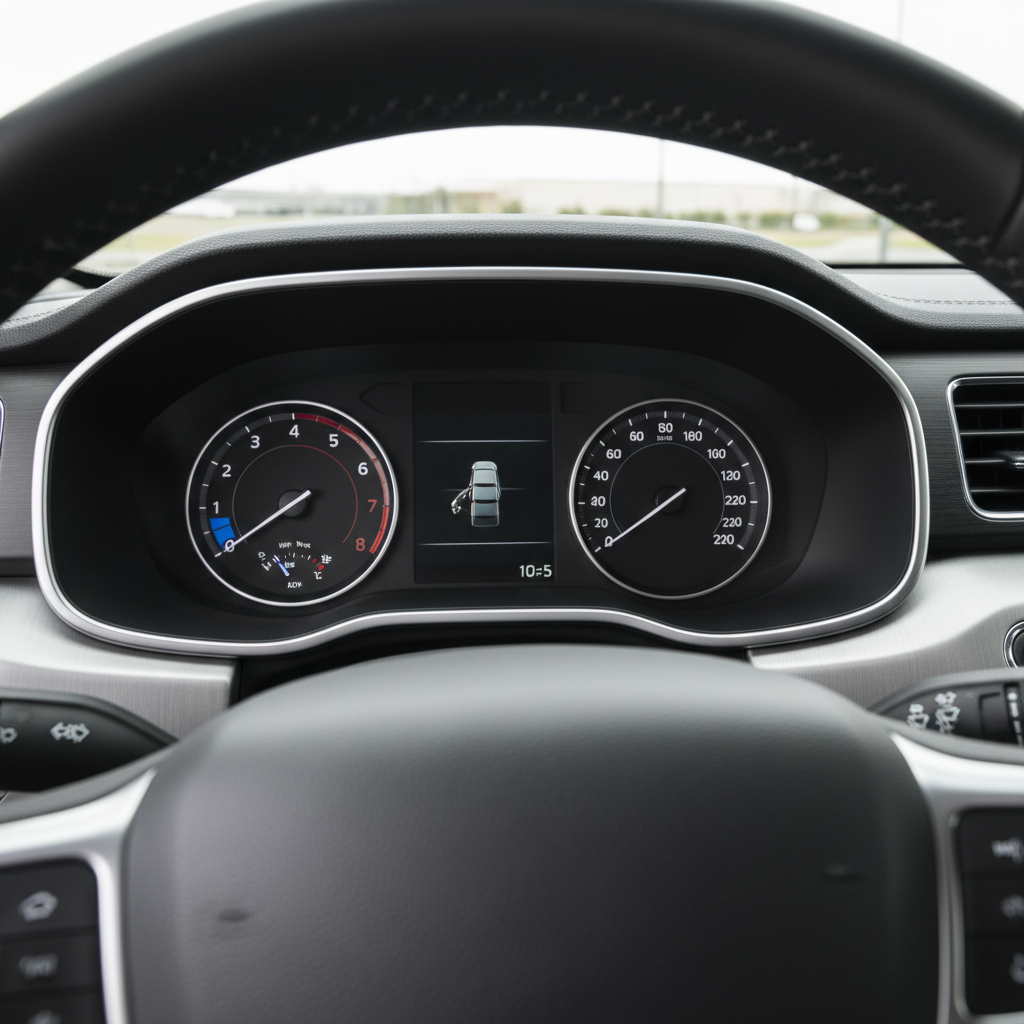
- Stays on C (cold) forever: often a thermostat stuck open, a bad sensor, a wiring issue, or the gauge itself.
- Pegs on H (hot) right after start: more consistent with a short in wiring, a sensor circuit issue, or cluster failure than a truly overheating engine.
- Moves randomly or drops out: commonly a loose connection, corroded plug, failing sensor, or instrument cluster stepper motor issue (varies by vehicle).
- Reads “normal” but you suspect it’s lying: possible if the gauge is damped (intentionally not very precise), or if the engine computer sees a different value than the cluster.
According to NHTSA, engine overheating can contribute to breakdowns and safety risks, so if you suspect real overheating, treat it as a priority over the gauge problem.
Quick safety checks before you troubleshoot
Before chasing sensors, confirm you are not driving an engine that might be overheating. This is the part people skip because the gauge is already “broken,” but it’s the part that saves engines.
- Do not open the radiator cap hot. Wait until fully cool, and if you are unsure, ask a mechanic for help.
- Turn the cabin heat on full hot if you suspect overheating, it can help shed heat long enough to pull over safely.
- Watch for warning lights, steam, sweet coolant smell, coolant puddles, or a sudden loss of power.
- If the engine bay feels excessively hot and you see steam, shut down and tow rather than “limp home.”
According to AAA, preventive maintenance and addressing warning signs early reduces the odds of roadside breakdowns. That applies here too: treat overheating symptoms seriously even if the gauge can’t confirm them.

Self-check checklist: figure out which system is failing
When you’re doing how to check car coolant temperature gauge not working, your goal is to separate three things: actual coolant temperature behavior, the sensor signal, and the gauge display.
5-minute driveway observations (no tools)
- Warm-up behavior: after a cold start, the upper radiator hose often stays relatively cool until the thermostat opens, then it warms quickly. If it warms gradually from the start, the thermostat may be stuck open.
- Heater output: if the cabin heater blows hot after a normal warm-up, the engine likely reaches operating temp, even if the dash stays “cold.”
- Cooling fan behavior: fans cycling on and off after the engine warms suggests the computer sees rising temps. No fan activity can be normal on some cars, but it can also hint at a sensor or fan control issue.
Basic tool checks (worth doing)
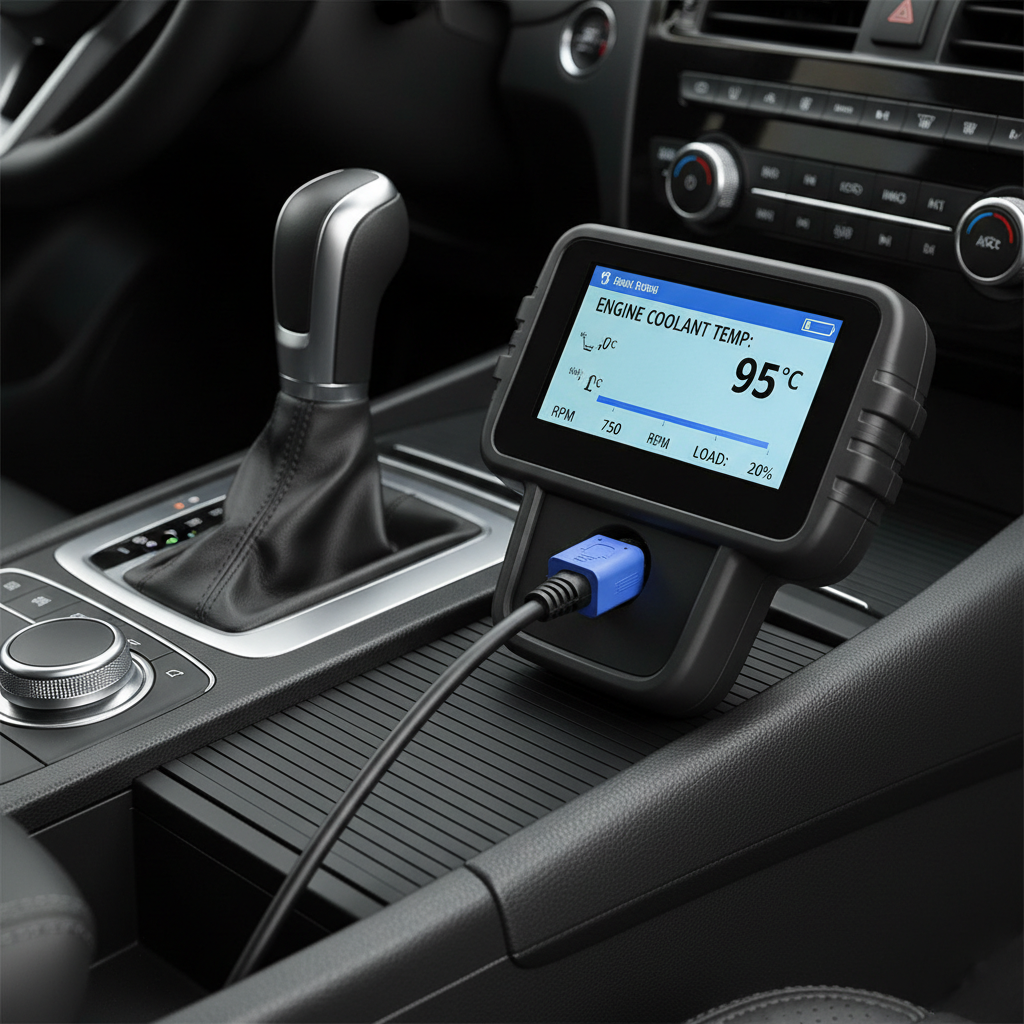
- OBD2 scan (cheap scanner): look at live data for Engine Coolant Temperature (ECT). If the ECU sees a sensible temp (typically rising steadily to the normal range), the sensor and ECU side may be fine, and the cluster/gauge circuit becomes more likely.
- Infrared thermometer: check thermostat housing or upper hose temp as a sanity check. You are not chasing exact numbers, you are looking for “plausible warm” vs “clearly overheating.”
If the OBD2 live temp looks normal but the dash gauge reads wrong, you are likely dealing with gauge/cluster, wiring between ECU and cluster (varies), or a separate sender used only for the gauge on older vehicles.
Common causes, matched to symptoms
The same “dead gauge” complaint often has a few repeat offenders. Here’s the practical breakdown.
| Symptom | Likely causes | What to check first |
|---|---|---|
| Gauge stays cold, heater is hot | Faulty gauge sender/ECT sensor, wiring/connector corrosion, cluster issue | OBD2 live ECT, sensor connector condition, grounds |
| Gauge stays cold, engine takes forever to warm | Thermostat stuck open, low coolant (sometimes), wrong thermostat rating | Warm-up time, hose behavior, coolant level when cold |
| Gauge pegs hot immediately | Short to ground, sensor circuit short, cluster fault | Wiring insulation, connector moisture, fuse/cluster test |
| Gauge fluctuates or drops out | Loose connector, damaged harness, intermittent sensor, failing cluster motor | Wiggle test at connector (engine off), harness routing, scan for codes |
| Gauge normal but car overheats symptoms | Real cooling issue (leak, radiator, water pump, fan control), gauge damped | Coolant level, leaks, fan operation, professional pressure test |
Step-by-step: how to check the gauge circuit (home-friendly)
You can do a lot without deep electrical skills, but be honest about your comfort level. If you are unsure around wiring, ask a qualified technician.
1) Check for a related warning light or stored codes
Scan for codes like P0117/P0118 (ECT circuit low/high) and check for any “engine temperature” or “cooling fan” related codes. If codes exist, they often cut the search time in half.
2) Inspect coolant level and obvious leaks (engine cold)
Low coolant can cause erratic readings in some situations, and it can also create real overheating risk. Look at the reservoir level, hose connections, radiator end tanks, and the area under the water pump for crusty residue.
3) Inspect the sensor connector and harness
- Find the coolant temperature sensor or gauge sender (location varies by engine).
- Look for greenish corrosion, oil contamination, broken lock tabs, or coolant wicking into the connector.
- Check harness routing for rub-through near brackets and pulleys.
This sounds basic, but intermittent gauge problems are often a connector problem pretending to be an expensive part.
4) Verify what the ECU “thinks” the temperature is
If your scan tool shows the ECT reading climbing smoothly from ambient to normal operating range, that is meaningful. It suggests the sensor signal is plausible, even if the dash gauge is wrong.
5) Fuse and cluster basics
Check your owner’s manual fuse diagram for instrument cluster and engine control fuses. A blown fuse can take out multiple gauges, backlighting, or the cluster logic. Replace fuses only with the correct rating, and if it blows again, stop and diagnose the short.
Practical fixes by scenario (what usually works)
Once you narrow the cause, the fix becomes less mysterious.
- Thermostat likely stuck open: replace thermostat and gasket, then bleed air from the cooling system per service procedure. Many cars trap air easily, and trapped air can mimic sensor issues.
- Bad ECT sensor or gauge sender suspected: replace the sensor with an OEM-quality part, inspect the connector, and clear codes. On some vehicles, a separate sender feeds only the gauge.
- Corroded connector: clean using electrical contact cleaner, repair terminals if needed, and add dielectric grease only where appropriate (not on every terminal type).
- Instrument cluster issues: if OBD2 temp is normal but the gauge stays wrong, the cluster stepper motor or internal circuit may be failing. Repair options vary from cluster rebuild to replacement and reprogramming.
When you do how to check car coolant temperature gauge not working and you end up at “cluster,” that’s not rare, but it’s also the point where vehicle-specific diagnostics matter.
Common mistakes that waste time (or create new problems)
- Assuming the engine is fine because the gauge is dead: the gauge is a warning tool, not a guarantee.
- Mixing coolant types randomly: it may cause gel/sludge in some systems. If you are unsure what’s in the car, consult the manual or a shop.
- “Parts cannon” approach: replacing thermostat, sensor, and cluster in one weekend feels productive, but you can miss a $0 connector problem.
- Opening the cooling system hot: burns happen fast, and it can turn a simple check into a medical problem.
According to EPA, proper handling and disposal of automotive fluids matters because many are hazardous to people and the environment, so collect spilled coolant and dispose of it through an appropriate facility.
When to stop DIY and get professional help
Some situations are simply not worth guessing.
- Any sign of real overheating: steam, boiling sounds, repeated coolant loss, or rising temps on OBD2 live data.
- Coolant contamination (milky oil, oil sheen in coolant) since it can indicate internal engine issues.
- Electrical diagnosis beyond basics: repeated fuse blowing, harness damage deep in the engine bay, or cluster programming requirements.
- You cannot bleed air successfully and temps stay unstable, because some vehicles require special procedures or tools.
A good shop will typically pressure-test the cooling system, verify fan control, confirm sensor readings, and compare ECU data to cluster behavior before recommending parts.
Key takeaways (so you can act today)
- Confirm engine temperature reality first using heater output, OBD2 live data, or an infrared thermometer.
- If the ECU reads normal but the gauge is wrong, focus on cluster/gauge circuit and wiring rather than the cooling system.
- If warm-up is slow and the gauge stays cold, a thermostat stuck open is a common, very fixable culprit.
- Any overheating symptom beats the gauge problem, stop driving and get it checked.
If you pick one next step, make it this: plug in a basic OBD2 scanner and look at live coolant temperature. It’s often the fastest way to keep the troubleshooting honest.
FAQ
How do I know if my car is overheating if the coolant gauge is broken?
Look for real-world signs: warning light, steam, hot coolant smell, loss of cabin heat, or rising temp on OBD2 live data. If you suspect overheating, driving further may cause damage, so consider towing.
Can a bad thermostat cause the temperature gauge to not work?
It can contribute. A thermostat stuck open may keep coolant too cool for too long, so the gauge barely moves. That said, a thermostat issue usually does not make a gauge peg hot instantly.
Is it safe to drive when the coolant temperature gauge is not working?
Sometimes, but it depends on whether you can confirm temperature another way. If you can monitor coolant temp via OBD2 and it stays stable, many people drive short-term, but if you see any overheating sign, stop and get help.
Will a failing coolant temperature sensor always trigger a check engine light?
Not always. Some sensor drift stays within “plausible” range and may not set a code, while wiring faults often do. That’s why comparing scan data to actual warm-up behavior can be useful.
Why does my gauge read hot right after I start the car?
A gauge that pegs hot immediately usually points to an electrical problem, like a shorted wire or a sensor circuit issue, rather than a cooling system that truly overheats in seconds.
What’s the difference between an ECT sensor and a temperature sender?
On many newer cars, the ECT sensor feeds the ECU, and the dash gauge is driven from ECU data. On some older designs, a separate sender feeds the gauge directly, which changes how you test and what you replace.
How much does it usually cost to fix a coolant temp gauge problem?
It varies widely by cause. A thermostat or sensor can be relatively affordable, while instrument cluster repair or wiring diagnosis can cost more because labor and programming requirements differ by vehicle.
If you’re in the middle of how to check car coolant temperature gauge not working and you’d rather not bounce between guesswork and parts swapping, a quick scan tool check plus a targeted inspection from a reputable shop can save time, especially when wiring or cluster faults enter the picture.